
march/april 2026 Edition
Joseph McCoy Remembrance Event Thursday, April 23 at 7 p.m.
On April 23, 2026, please join members of the Alexandria Community Remembrance Project as we gather at Roberts Memorial United Methodist Church (606 S. Washington Street) to hear Keynote Speaker Dr. Rodney Sadler, head of the Center for Social Justice and Reconciliation at Union Presbyterian Seminary in Charlotte, North Carolina. Dr. Sadler will offer remarks on the relationship of violence, power and the people for this year’s Remembrance of Joseph McCoy.
Details about the event follow the Feature Story.
Bloody Sunday was Just Another Day in Alabama
Employing violence against Black citizens in the South was so normal that had there not been cameras rolling to capture Alabama law enforcement officers brutally beating nonviolent marchers in Selma on March 7, 1965, it most likely would have been considered “just another day.”
Think about how routine, how normalized the violence wielded by the government against unarmed Black citizens that day must have been for hundreds of state troopers to attack peaceful protestors while news crews filmed.
Black Americans were well acquainted with the fear inducing force commonly brought down upon their communities any time those in power felt threatened. Even those who didn’t live in the South were aware of the “law and order” tactics used by the state.
Catholic Monk and Author, Thomas Merton, who was white, observed that conservatives ply “repressive power” and use “repressive agencies - police, national guard, army,” that they “fully control” to defend the status quo, prevent disorder, protect property “especially their own” and restore safety as defined by them.
That is why it was necessary that the campaign for civil and voting rights be nonviolent. In order to jostle the collective white conscience, Black people had to behave opposite to the way they were treated.
“The purpose of nonviolent protest, in its deepest and most spiritual dimensions is to awaken the conscience of the white man to the awful reality of his injustice and of his sin, so that he will be able to see that the Negro [sic] problem is really a White problem: that the cancer of injustice and hate, which is eating white society and is only partly manifested in racial segregation with all its consequences, is rooted in the heart of the white man himself,” Merton wrote in the same essay in 1964.
It was imperative that white Americans see what was happening in black and white because many Black Americans believed democracy itself was on the line. Those following Dr. Martin Luther King, Jr. were “convinced that there is more at stake than civil rights. They believe that the survival of America is itself in question,” Merton wrote.
It Rained Bombs
From just after World War II to 1963, Birmingham, Alabama’s Black citizens were subject to more than 50 bombings, earning the city the moniker: Bombingham. The violence in Alabama, a reaction to both the Supreme Court’s desegregation order and Black activism for civil and political rights, wouldn’t have happened without the complicity of local and state officials, many of whom were members of/or colluded with the Ku Klux Klan.
“In the Southern White mind the concept that a Negro might have rights in the same sense and in the same way as a white man simply does not exist. Hence the idea of “order” in the minds of people like Governor Wallace [Alabama] is simply that the Whites may be guaranteed safety in doing anything they like to the Negro without fear of retaliation.”
Black people had no recourse, they had civil and political rights on paper, but the courts and federal government wouldn’t enforce them. White people controlled all the levers of power, including the mainstream press and church pulpits.
In a bid for national Voting Rights legislation, a new Minnesota Senator, Walter Mondale, a Democrat said it was time to recognize that “It is the local elected official – not the Federal marshal or Federal judge – who daily dispenses justice or injustice to the Negro. It is the state police, the local sheriff, the local chief of police, the local school board members, the local voting registrar who set the pace in closing the glaring gap between the Federal “right” and local “practice” under which that right is denied.”
Alabama’s City Halls were controlled by the same people who ran White Citizen Councils, aka the White Collar Klan, while Dixiecrats ran the Statehouses and represented the state in Congress. Like Sinn Fein and the Irish Republican Army in Northern Ireland, conservative southern politicians were backed up by an unaccountable terrorist wing.
“Curious that the ones who repeatedly lecture the Negro on law and order, themselves are in league with murderers and thugs,” wrote Merton, adding, “Such “order” is no order at all, it is only organized injustice and violence.”
As civil rights activism garnered some successes, racial violence ratcheted up.
- In 1963, the day after Birmingham agreed to desegregate lunch counters, restrooms, drinking fountains and fitting rooms, and promised to make more jobs available to Black residents, Martin Luther King, Jr. 's hotel and his brother’s house were bombed.
- Eighteen days after MLK, Jr. delivered the “I Have a Dream Speech” from the steps of the Lincoln Monument to 250,000 people who marched there, vigilantes bombed the 16th Street Baptist Church in Birmingham, killing four girls, Addie Mae Collins and Carole Robertson (14) and Cynthia Wesley and Denise McNair (11), and injuring 20 more Black people.
“This was the white Southern reply to the March,” according to Merton, who wrote, “The tragic September bombings and shootings in Birmingham were a shocking contrast to the peace and dignity of the Washington March of August 28th.”
The violence inspired fear, anger and anguish, and left Dr. King in despair. He said after the deaths of the little girls he began to think change was hopeless. But then, he witnessed 3,000 young people defiantly march out the doors of the 16th Street Baptist Church, “ready to pit nothing but the power of their bodies and souls against Bull Conor’s police dogs, clubs and fire hoses,” and his determination was restored.
The Civil Rights Bill of 1964 survived a lengthy Southern-led filibuster and was approved on June 19, 1964. Two days later, three civil rights workers were stopped by local police and the Klan - they were tortured and killed. The state-sanctioned violence against peaceful Black Americans and those supporting their cause resulted in some progress, but at a very high cost.
And still, despite the loss of life and limb, the final bill was compromised. In order to win necessary votes, lawmakers had to eliminate measures that would have addressed voter suppression tactics, which opened up a new front in the war against white supremacy.
1965: Voting Rights
After President Johnson signed the Civil Rights Act on July 2, 1964, Martin Luther King, Jr. wrote,
“Now we are trying to apply the method of nonviolence to the problem of disenfranchisement which has plagued the Negroes in the South for almost 100 years…We feel that once the negroes in the South gain the right to equal representation in government, many of the problems that are not being dealt with by the southern racist governments can and will be dealt with by moderate whites, and negroes who have not a chance to get into office as long as negroes are kept from freely registering to vote.” In 1965, Selma, Alabama and surrounding counties became ground zero for the campaign.
For a very long time, Black citizens were prevented from registering to vote by local officials and members of the business community who threatened their jobs, evicted them from their homes, and restricted the time when people could register at the court house. Election officials flunked doctors, professors and teachers who dared to take the literacy test. Since 1963, the Student Nonviolent Coordinating Committee and Dallas County League of Voters had been organizing Freedom Mondays - lining hundreds up outside the courthouse in an attempt to register to vote. Even though Black people were the majority in Selma, at the start of 1965, voter rolls remained 99 percent white.
That January, SNCC sent Bernard Lafayette to help organize the drives, but the Klan beat and nearly killed him. On January 18, MLK, John Lewis and 400 Selma residents marched from Brown’s Chapel to the courthouse. But Sheriff Clark and his officers derailed the protest.
On January 19, they returned and when they refused to be derailed again, they were arrested. More protests and more arrests followed until nearly 2,000 Black people had been jailed by Clark for “contempt of court, juvenile delinquency and parading without a permit.” Even after a federal judge ordered the Sheriff to allow orderly registration, Clark continued to interfere, forcing those in line to wait hours to take the literacy test. In the end, not a single name was added to the voter rolls.
In nearby Marion, SNCC’s Rev. James Orange had organized the young people to march for their parents' right to vote. (It was safer for the youth to march because they wouldn’t lose their jobs if they were arrested, according to Selma Civil Rights Activist Jo Ann Bland.) On Feb. 18, 1965, Rev. Orange was arrested for disorderly conduct and for contributing to the delinquency of minors. At 3 p.m., a state trooper threw a rope with the end tied into a noose over the top of Rev. Orange’s cell. “He had to sit there all day with that noose swinging in his face, knowing it may be his last day on earth,” Bland said.
When the young people who had been arrested with Rev. Orange were released, they went straight to the mass meeting being held two blocks away at Zion Methodist Church. According to Bland, they told the attendees the police were threatening to lynch Rev. Orange. They decided to march to the jail, surround it and stay the night. But,“When they left the church they were attacked and brutally beaten by law enforcement officers,” said Bland.
Della Simpson Maynor, who was 14, was there that night. In a 2023 interview, she said the police appeared out of nowhere, they “just came out of the darkness.” And they didn’t care who they hit - she saw them bludgeon a pregnant woman, a minister who was kneeling and praying, they even hit the children. Maynor had tried to hide in the church’s shadow, but an officer spotted her, and as she raised her hand to protect her head he cracked his club on her arm.
News reports say that the Jackson family ran into Mack’s Cafe to escape the violence, but Bland, recounted the following: Jimmie Lee Jackson, 26, “emerged from the church just in time to see a state trooper beating his 82-year old grandfather. Jimmie Lee said to him, ‘Please don’t beat my grandfather, he is an old man, take him to jail if he has done something wrong.’ Jimmy’s mother saw them beating her father too and she ran over, and as she approached, that trooper raised his billy club to hit Jimmy’s momma and Jimmy did what I would have done, he stuck up his hand to keep him from hitting his mother. That trooper drew his gun and he shot him. Jimmie died eight days later in Selma’s Good Samaritan Hospital.” (The Black hospital, despite the Civil Rights Act, health care was segregated in most of the South.)
Sen. Mondale told his colleagues, “it has reached the point where the bare exercise of rights as a human being and as a citizen of the United States brings the threat of physical injury and even death.”
Bland said that after Jimmie died, “the leaders decided that we would walk from Selma to Montgomery; one, to protest this young man’s senseless death, the other was to demand the right to vote from Gov. George Wallace.”
The March For Freedom was a direct result of state violence and was planned for March 7, 1965.
Bloody Sunday
If Brown Baptist Chapel was the headquarters for the campaign to vote, the George Carver Homes were the epicenter of the movement, it was the place where the foot soldiers awaited deployment. That is where Bland, who was 11, and the youngest protester to march that day, waited with her older sister for the organizers. The two might have been too young to vote, but their parents weren’t.
The morning was eerily quiet - it was a Sunday and everything was closed - but it was still more quiet than normal, according to Bland. News outlets said there weren’t any police on the streets of Selma as the demonstrators walked from Brown Chapel to the Carver Homes.
When SNCC’s John Lewis arrived at Footsoldier Park he wore a trench coat and carried Merton in his back pack. He had been inspired by Merton’s words, “Is it not possible that whites and Negroes might join together in a creative political experiment such as the world has never yet seen, and in which the first condition would be that the whites consented to let the Negroes run their own revolution nonviolently, giving them the necessary support and cooperation, and not being alarmed at some of the sacrifices and difficulties that would necessarily be involved?”
About 600 demonstrators walked through the quiet town unmolested. They lined up two-by-two, to cross the Alabama River and leave Selma behind. Lewis and Rev. Hosea Williams led the marchers under the steel arches, under the name of a notorious Confederate General and Grand Dragon Klansman, Edmund Pettus, for whom the bridge was named.
Bland and her sister were much further behind. When they crested the bridge she saw the state police lined up across all four lanes of Route 80. “I knew we were not going to Montgomery when I saw that,” she said. Behind the protestors appeared teams of deputies - some on horseback.
Alabama Governor George Wallace had ordered law enforcement to stop the marchers.
“We continued to walk until we came within hearing distance” of the troopers, Lewis said in a 2012 interview with Democracy Now!
Major John Cloud raised a bull horn and said, “This is an unlawful march, you have three minutes to disperse. Go home or return to your church.”
“Major, give us a moment to kneel and pray,” asked Rev. Williams. They ignored him, the state troopers advancing immediately.
“They wore gas masks and helmets, they were beating us with night sticks and bull whips…they trampled us with horses,” Lewis said.
Bland thought she heard gun shots, but it was the sound of clubs and whips striking human beings. People were screaming, “I thought they were killing them, shooting them, I didn’t know because I was too far back to really see.”
Lewis was struck in the head and his legs went out from under him. “I felt like I was going to die…I thought I saw death,” he recounted.
Bland turned around to go back, but it was too late. “They came in from both sides, the front and the back on horses. I remember people falling down and lying, bleeding, not moving and you couldn’t stop to help or you would be beaten too.” She and her sister were stuck in a bottleneck, “The tear gas was there, and this big cloud.” Panicked and feeling stuck, Bland watched as a mounted officer closed in on “this lady,
I don’t know what happened, but the last thing I heard was the sound of her head hitting the pavement.”
Officers released 40 cans of tear gas, 12 cans of smoke and eight cans of nausea gas on the peaceful protestors.
Bland was unconscious in the back of a car with her head in her sister’s lap when she came to. “Blood was everywhere,” she said. Her sister had a gash across her forehead and was also bleeding from the back of her head. Fear and terror welled up inside of the little girl and she screamed. Then Bland’s sister pulled her out of the car and they ran. “We ran into the church thinking we would be safe, but we were not. They came into that church and started beating people all over again, it was horrible,” she said, adding, “They didn’t care that we were children. They just didn’t care.”
The terror didn’t stop at the church doors, it went on and on. “What happened at that bridge didn’t stop at that bridge, it happened in our neighborhood all night long,” she said.
We Interrupt This Broadcast…
In a Letter to a White Liberal, Merton stated, “the average Southern White mind is unconsciously and sometimes consciously identifying itself with “an explicitly Nazi brand of racism.”
Even for those who had never read Merton, when ABC’s Frank Reynolds interrupted the prime time broadcast of the award winning film “Judgement at Nuremberg” at 9:30 p.m. to deliver a special report with images of the cruel brutality delivered in Selma earlier that day, the comparison was obvious.
Nearly 50 million Americans had been watching Hollywood stars depict the daily choices and compromises ordinary Germans had made that enabled the Holocaust. “The juxtaposition struck like psychological lightning in American homes,” wrote Gene Roberts and Hank Klibanoff in The Race Beat.
This time the indignation wasn’t among the Conservatives. “Yesterday was a sad day for America, it was a day in which we shall always be ashamed,” Sen. Mondale said on the Senate floor on March 8. “When law enforcement officials in these United States of America find it necessary to turn on a peaceable group of citizens, who have no weapons and who indicate no signs of impending aggression or violence, find it necessary to use nightsticks, tear gas and whips to attack and brutalize these citizens, then the very foundation and root of our American democracy is at stake.”
He then turned to his colleagues and said, “the only question facing us in this Congress is what we, and the decent and honorable people who know better, will do.”
Images from Selma drove Americans into the streets. In more than 80 cities across America, traffic was blocked, people marched, and students held sit-ins to protest the state violence they witnessed and to demand voting rights for all.
“The citizens of Minnesota and of the United States can no longer tolerate the trampling of human rights by southern law enforcement officers in the name of law and order. This is totalitarian oppression at its worst – it is what we fought against in World War II and it is what we are fighting against in the cold war today,” Sen. Mondale said on Monday.
But there were others who reacted differently, who saw the marchers as criminals. As far as they were concerned, the force used by Alabama was justified because the march was illegal. Some even argued the agitators weren’t really peaceful, they were trying to bait law enforcement into beating them to garner publicity.
Turn Around Tuesday & Beyond
On March 9, Martin Luther King, Jr. was in Selma to lead another attempt to ‘Walk for Freedom’ to Montgomery. He asked federal courts for an injunction to stop the state from interfering with the march but Judge Frank Johnson wouldn’t grant it without a trial. The organizers were forced to wait to go to Montgomery, but they decided to make a symbolic attempt.
As the footsoldiers prepared to leave that Tuesday, Jo Ann Bland was at the playground. After what had happened Sunday she was afraid to march, “whatever the cost of this freedom was, it was too much for me. I was going to stay on that playground and play.” But when her father sought her out and she told him why she wasn’t going to march, he said: “You have to go back. If you don’t go back it means they won.”
Full of fear, Bland joined the rows of doubled up protestors walking onto the Edmund Pettus Bridge. Her unease grew when she was confronted once more with rows of law enforcement waiting for them on the other side. She was close enough to hear the exchange between the troopers and the leaders of the march. “This time, Dr. King himself asked permission to pass. The police told him the same thing.” Bland braced herself for the attack. But then, Dr. King and Dr. Ralph Abernathy kneeled, prayed and led the demonstrators back to the church without further incident.
The civil rights activists knew they had to continue to Montgomery, according to Lewis, who explained, “We had been tracked down by the spirit of history and we couldn’t turn back, we had to move forward. We became like trees planted by the rivers of water. We were anchored.”
The Alabama Journal took a dim view of the plan to march again, quoting former President Truman who called the whole thing “silly” and said the demonstrators “can’t accomplish a darned thing…All they want is to attract attention.”
Gov. Wallace flew to Washington to ask President Johnson to stop the proposed march. He defended the use of violent force against the peaceful demonstrators saying they were a threat to the “peace and security of the people of Alabama.”
At a press conference on March 13, President Johnson clearly condemned the violence, saying,
“It is wrong to do violence to peaceful citizens in the streets of their town.” He disagreed with the Governor and suggested to the press that “Those who do injustice are as surely the victims of their own acts as the people that they wrong. They scar their own lives and they scar the communities in which they live. If we put aside disorder and violence, if we put aside hatred and lawslessness, we can provide for all our people great opportunity almost beyond our imagination.”
He announced he would be “directing the federal court in Alabama to order the law officials of Alabama not to interfere with American citizens who are peacefully demonstrating for their constitutional rights.”
Two days later, President Johnson appeared on national television where he told the American people, “At times history and fate meet at a single time in a single place to shape a turning point that is man’s unending search for freedom. So it was at Lexington and Concord. So it was a century ago at Appomattox. So it was last week in Selma, Alabama.”
He said the demonstrations in Selma had a much larger and deeper meaning for American democracy, and asked for the public’s support for legislation that would finally carry out the 14th and 15th amendments to the Constitution. “Those who appeal to you to hold onto the past do so at the cost of denying you your future,” he said, adding, “This great, rich, restless country can offer opportunity and education and hope to all.”
Organizers expected about 700 people from outside Selma to show up for the March 21 walk to Mongtomery. That day, led by Black Americans and accompanied by the national guard, more than 3,000 people from every part of the nation marched across the Edmund Pettus bridge.
Little Jo Ann Bland was there too.
On the way to Montgomery, she walked past billboards that accused Dr. King of running communist training schools, and…
On the way to Montgomery, she stepped on leaflets dropped from planes that called for white people to fire Black workers and boycott their businesses.
They arrived at the Capitol after four long days of walking. More than 50,000 people stood in the streets to hear Rosa Parks, John Lewis and Dr. King, speak from the steps of the Capitol.
Jo Ann Bland, the youngest marcher on Bloody Sunday, who wanted to give up after the horror she witnessed, was able to hear Dr. King’s reassuring words that day, “I know some of you are asking today, how long will it take? I come to say to you this afternoon, however difficult the moment, however frustrating the hour, it will not be long, because truth pressed to earth will rise again.”
Bland died on Feb. 19, 2026, she was 72 years old. In 2022, Alexandrians who attended the pilgrimage to Montgomery, had an opportunity to meet her and hear her story in her words. We had more than 30 high school students with us, and to them, Bland had a special message - what happened in Selma was not that long ago. She told them how important their voice can be when it comes to changing the world, “social movements are like jigsaw puzzles, if your piece is missing, the picture is not complete.”
What happened in a small southern town 61 years ago this month brought America to a point of moral reckoning and breakthrough. It happened because ordinary people, like Jo Ann and her sister, her friends and neighbors, organized and trained and put themselves at risk.
2026 Joseph McCoy Remembrance Events
An Examination of State Violence
Thursday, April 23, 2026
Roberts Memorial United Methodist Church, 606 South Washington Street
Reception at 6:30 pm, Church Hall
Program from 7- 8:15 pm
In Remembrance of Joseph McCoy, the Alexandria Community Remembrance Project invites the public to an evening of reflection with Dr. Rodney Sadler at Roberts Memorial United Methodist Church on April 23, 2026, 129 years after McCoy’s lynching in Alexandria.
The widely published Dr. Sadler plans to explore the historic use of violence by those invested with authority and power, with remarks titled, “Governed by Fear and Hate: The Tools of the Supremacist State.”
Rev. Dr. Sadler heads up the Center for Social Justice and Reconciliation at Union Presbyterian Seminary in Charlotte, North Carolina, where he focuses on the nexus of race, faith, and politics. In addition to his writings, he hosts a national radio program called “Politics of Faith,” a series of discussions called “Dangerous Dialogues,” and he represents his district in the North Carolina State Legislature. He has a number of connections to the District and NOVA, he is a graduate of Howard University and has been a senior fellow at George Mason University’s Center for World Religion, Diplomacy and Conflict Resolution.
Roberts Memorial United Methodist Church, one of the most historic Black churches in Alexandria, was the home church for the McCoy family. This will be the second time Roberts Memorial will host the Remembrance event. Parking is permitted at Demaine Funeral Home and as available on nearby streets.
NAACP Workshop: Civil Rights Advocacy Training
Friday, April 24, 2026
Oswald Durant Center, 1605 Cameron St.
Workshop 6-8 pm
Free with Registration
In Remembrance of Joseph McCoy, the NAACP is pleased to host a training for those interested in Civil Rights advocacy. NAACP Senior National Director of Advocacy Wisdom O. Cole will lead the workshop, briefly reviewing the Civil Right Movement with an emphasis on the use of nonviolence. The workshop will include information on rights and responsibilities, safety, maintaining discipline, and other practical skills. Cole has extensive experience leading NAACP trainings for the organization’s Advocacy Institute. Onsite parking is available behind the Durant Center. Please register for this free workshop here: Registration.
In The News
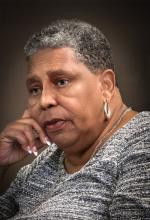
Civil Rights Pioneer. Photo credit: Lois Kebe
On Feb. 19, 2026, Jo Ann Bland, a Civil Rights Pioneer, died surrounded by her family in Selma, Alabama. Bland was the youngest person to march on Bloody Sunday; she was arrested and jailed multiple times before she was a teenager; and Bland was one of six young people to integrate Selma’s high school. She went onto college and to serve in the U.S. Army before returning to Selma in 1989, where she co-founded of the National Voting Rights Museum. In 2022, Alexandrians met Bland when we took her Journeys for the Soul tour. We were privileged to witness her forceful yet loving testimony about a young girl who stood up, joined her community, and fought for what was right and just. The Equal Justice Initiative’s Bryan Stevenson said, “Jo Ann Bland raised her powerful voice for equality and racial justice, and she refused to be silenced. She inspired countless young people with her courage and championed the power of ordinary people to do extraordinary things to advance justice.” As part of our tour, Bland took us to a neglected, cracked piece of concrete where the footsoldiers deployed on Bloody Sunday and told us about her desire to build a place of reflection, a park, and an education center in a space she called hallowed. To learn more or to donate to her dream in her memory click here.
Events of Interest
Remember the Pearl Weekend
Freedom House Museum, 1315 Duke Street
Saturday, April 11 and Sunday, April 12
Mention Remember the Pearl for free admission
All weekend, visitors can join in docent-led discussions during regular museum hours about the history of the Pearl and its impact on society.
The Framework for Social Resistance panel will take place on Saturday, April 11, 10-11 a.m. The framework will be explored through the historic lens of the Edmonson sisters and contemporary lens of Mr. Earl Yates, a long-time member of the Social Justice Committee at Shiloh Baptist Church in Washington, D.C. who has spent his career working with developing nations through the Peace Corps and USAID. Attendees will have time to reflect and apply the framework to their own lives.
Alexandria Historical Society announces Hayti Walking Tour with Dr. Pam Cressey
The tour will begin at the corner of Wilkes and South Royal Streets, near the Wilkes Street
Saturday, April 11
10:30 a.m. - 12:30 p.m.
Tickets are $25 for non-members and $20 for members.
Online registration is required.
Purchase tickets
The Alexandria Historical Society’s Hayti Walking Tour will explore the history of Hayti, one of Old Town Alexandria’s most important historic Black neighborhoods, and will be led by Dr. Pam Cressey as part of the Society’s 250th Celebration and Behind the Scenes series.
Participants will explore the history of Hayti, a neighborhood established by free Blacks in the early 1800s within the southeastern quadrant of Old Town. The area remained a place where Black families lived, worked, and worshiped well into the twentieth century.
The tour will highlight Hayti’s notable people and places, along with the archaeological research that has helped uncover and preserve its history. The neighborhood’s name likely reflected the spirit of liberation associated with Haiti, whose revolution inspired free Black communities throughout the Atlantic world in the early nineteenth century.
Street parking is available in the neighborhood. In case of inclement weather, the tour will be rescheduled and registrants will be notified.
The Alexandria Historical Society promotes the history of Alexandria, Virginia, through lectures, tours, publications, and public programs that connect the community with the city’s past.
Upcoming Committee Meetings
The Committee of Inquiry’s research team will meet at 7 p.m. at the Alexandria Black History Museum on April 13.
The next Faith Leader’s Clergy Coffee will take place on April 15 at 9 a.m. at the Old Presbyterian Meeting House.
The Alexandria City High School Remembrance Student Club will meet after classes on April 16 to share what they learned on the Banned Truth Tour.
Committee Reports
The Committee of Inquiry research team met on March 9 to review progress on primary research.
The Alexandria Community Remembrance Project Steering Committee met on March 11 and planned for the Joseph McCoy Remembrance Events. The Office of Historic Alexandria shared information on the upcoming Sails on the Potomac Tall Ship, taking place June 12-14 along the Alexandria Waterfront as part of the 250th Commemoration of the nation. They also shared plans for the Citywide Juneteenth celebration on June 19th. The McCoy and Thomas Memorial Scholarship Program has received generous donations from the Old Presbyterian Meeting House and the Church of the Resurrection.
The Remembrance Student’s final Banned Truth Tour was held on Saturday, March 14, and students learned about the 1939 Library Sit-In, Black education and segregation in Alexandria, and this city’s civil rights icons.
Alexandria Community Remembrance Project
The Alexandria Community Remembrance Project (ACRP) is a city-wide initiative dedicated to helping Alexandria understand its history of racial terror hate crimes and to work toward creating a welcoming community bound by equity and inclusion.
In Memoriam
Write "ACRP" in Comments on the donation form.
Office of Historic Alexandria
City of Alexandria, Virginia
ACRP@alexandriava.gov