

Purpose of the Report Cards
In 2021, Alexandria released its second Children and Youth Community Plan (CYCP), a roadmap for improving outcomes for all children and youth. The CYCP Report Cards help us track our progress and stay accountable to our community.
Published monthly by the City’s Department of Community and Human Services, each Report Card highlights:
- A key result we are working toward
- Current data and trends
- Actions underway to improve outcomes
- Community partners involved
- Performance measures that show impact
Report Cards also celebrate youth and caring adults who are helping “turn the curve” in Alexandria.
We use the Report Cards to:
- Increase transparency and accountability
- Highlight priority issues and progress
- Share data in clear, accessible ways
- Lift up youth-serving programs and partnerships
Our goal is to give community members, policymakers, and partners a clear picture of youth well-being and how we can work together to improve it.
Data come from public sources such as the U.S. Census, Virginia Department of Health, Youth Risk Behavior Survey, ACPS Scorecard, Alexandria Resident Survey, and Search Institute surveys, as well as performance data from more than 70 local youth-serving organizations.
Whenever possible, data are disaggregated to identify racial, economic, and social disparities so we can focus our efforts where they are most needed.
CYCP Annual Impact Reports
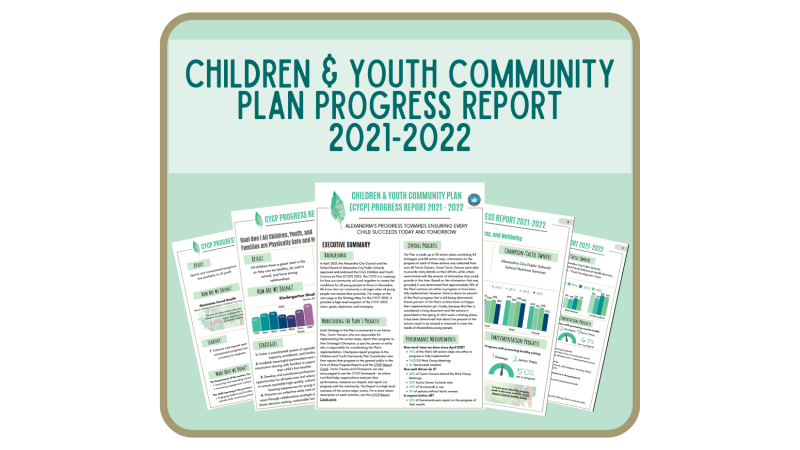

CYCP Report Cards
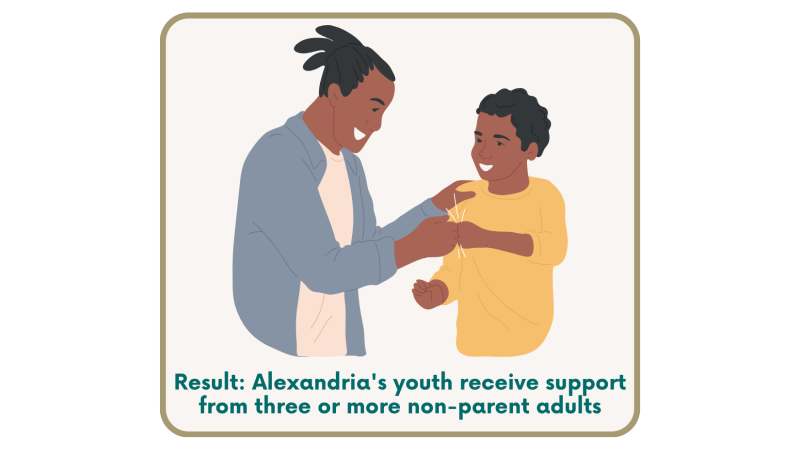
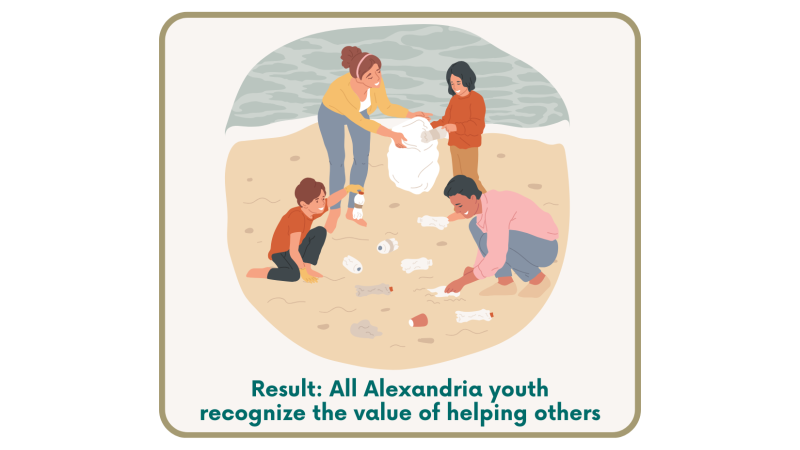
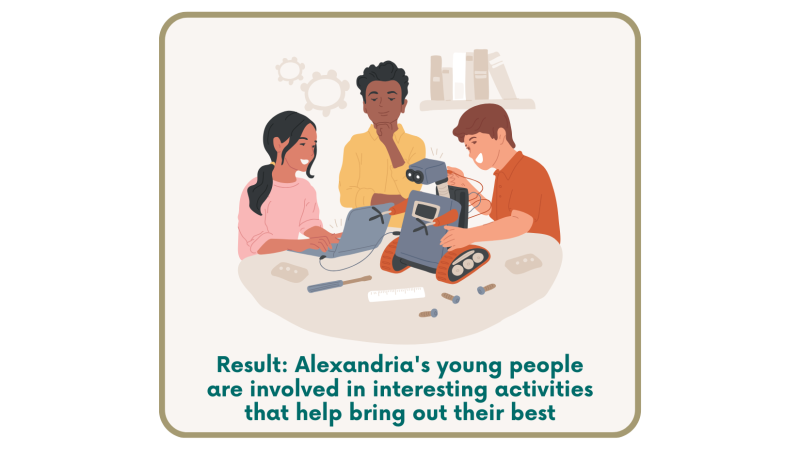
Community Report Cards made by Youth!
Every year, seniors at Alexandria City High School participate in Civic Action Projects, a project-based learning program in which civics and government students identify an issue that matters to them, connect it to public policy, and take “civic actions” to influence change. Through a partnership between the City of Alexandria and ACPS educators, scholars collaborate with City staff to deepen their educational experience and strengthen their role as civic leaders.
Beginning in 2025, students whose projects focused on issues connected to the Children and Youth Community Plan (CYCP) were invited to create their own Report Cards. These student-made Report Cards reflect youth perspectives on how CYCP-related issues impact them, while also offering solutions worth exploring to advance public policy in Alexandria.
These student-led efforts expand our understanding of children’s and youth’s experiences. They highlight the importance of listening to young voices and how those voices can help shape meaningful, community-driven change.
Youth Recommendations for Expanding Affordable Housing
Build More Affordable Homes
- Build and preserve more affordable housing. Students recommended increasing public funding for affordable-housing construction, developing more city-owned, subsidized, and otherwise affordable units, preserving existing affordable homes, and requiring newly created units to remain affordable over the long term (Sources: Housing Affordability in Alexandria, Kylie Hawkins and Taelor Mobley (2026); Affordable Housing by Michael G., Abdul S., and Mustafa K. (2025); Affordable Housing by sortocruzsheilyn (2025); Cost of Living by Jonathan Gonzales (2025); and Cost of Living by Elyas (2025)).
- Include affordable homes in new developments. Students recommended using inclusionary zoning, promoting mixed-income housing, partnering with developers to reserve homes for low-income families, and offering developers incentives to include affordable units in new projects. They also called for more affordable housing to be included as Alexandria continues to develop (Sources: Housing Affordability in Alexandria, Hawkins and Mobley (2026); Affordable Housing by Michael G., Abdul S., and Mustafa K. (2025); Affordable Housing by sortocruzsheilyn (2025); Cost of Living by Jonathan Gonzales (2025); and Cost of Living by Elyas (2025)).
- Make it easier to build affordable housing. Students recommended speeding up zoning and approval processes so affordable homes can be created more quickly. They also supported local policies that make it possible to develop more affordable housing in Alexandria. (Sources: Affordable Housing by diazgerman (2025) and Affordable Housing by sortocruzsheilyn (2025)).
Help Families Afford and Keep their Homes
- Help families stay in their homes and avoid sudden housing cost increases. Students recommended rent control or rent stabilization to limit large rent increases, rental and utility assistance for low-income families, and property-tax relief. One student specifically recommended waiving condominium fees for people earning less than 30% of the area median income so unexpected increases do not make housing unaffordable or force people to move. Students also recommended expanding eviction-prevention efforts, rental assistance, utility assistance, and tenant protections so families receive help before losing their housing (Sources: Housing Affordability in Alexandria, Hawkins and Mobley (2026); Low-Income Rent Solutions, Ashley Morales & Isa Furnari (2026); Cost of Living by David Fite, Alexander Silman & Alexis Romero (2026); Equitable Rent by Sally Patrick (2025); Affordable Housing by sortocruzsheilyn (2025); Cost of Living by Jonathan Gonzales (2025); and Cost of Living by Elyas (2025)).
- Expand housing support for families who are struggling to afford or keep their homes. Students recommended increasing funding for housing assistance and supportive housing programs, expanding rental support, and providing utility assistance to low-income families. They also identified legal-aid organizations as important resources for renters facing eviction or unfair housing practices (Sources: Housing Affordability in Alexandria, Hawkins and Mobley (2026); Affordable Housing by Michael G., Abdul S., and Mustafa K. (2025); Affordable Housing by sortocruzsheilyn (2025); and Cost of Living by Elyas (2025)).
Invest in Long-Term Housing Solutions
- Create reliable funding for affordable housing. One student recommended using housing trust funds supported by developer contributions and loan repayments. This would provide more money for affordable housing and help people who cannot afford rent on their own (Source: Equitable Rent by Sally Patrick (2025)).
- Follow through on the Housing 2040 Master Plan. One student recommended better supporting and enforcing strategies that are already part of the plan while adding new policies where needed. The Report emphasized looking at what has and has not worked, since rents and housing burdens have continued to rise and the plan has not yet achieved its intended results (Source: Equitable Rent by Sally Patrick (2025)).
Build Public Support and Shared Responsibility
- Build community support and involvement for affordable housing. Students recommended educating residents about housing affordability, tenant rights, budgeting, and financial literacy through schools, workshops, and community programs beginning at a young age. They also encouraged residents to advocate for affordable-housing policies, vote for leaders committed to addressing housing affordability, and help increase public understanding of housing insecurity and displacement (Sources: Cost of Living and Education by Micheal Clark (2026); Affordable Housing by sortocruzsheilyn (2025); Affordable Housing by diazgerman (2025); Affordable Housing by Michael G., Abdul S., and Mustafa K. (2025)).
Strengthening Household Financial Stability
- Teach financial literacy and budgeting beginning in elementary school and continuing through adulthood. Students recommended practical education about budgeting, tenant rights, leases, grocery shopping, utilities, emergency savings, and other everyday financial skills through schools, workshops, and multilingual community programs to help families better navigate Alexandria's high cost of living (Source: Cost of Living and Education by Clark (2026)).
- Make financial assistance easier to access before families reach a crisis. Students recommended simplifying application processes for rental and utility assistance, reducing unnecessary barriers, increasing public awareness of available programs, ensuring fair treatment during the application process, and providing assistance before families receive eviction notices. They also emphasized expanding support for ALICE households, who often struggle financially but do not qualify for many assistance programs (Source: Low-Income Rent Solutions, Ashley Morales & Isa Furnari (2026).
Student report cards informing these recommendations:
- Affordable Housing by Michael G., Abdul S., & Mustafa K. (2025)
- Affordable Housing by diazgerman (2025)
- Affordable Housing by sortocruzsheilyn (2025)
- Cost of Living by David Fite, Alexander Silman & Alexis Romero (2026)
- Cost of Living and Education by Micheal Clark (2026)
- Cost of Living by Jonathan Gonzales (2025)
- Cost of Living by Elyas (2025)
- Equitable Rent by Sally Patrick (2025)
- Low-Income Rent Solutions, Ashley Morales & Isa Furnari (2026)
Youth Recommendations for ensuring that families can meet immediate needs for Food, Utilities & Essential Household Supplies
Meet Students’ Food Needs During and Beyond the School Day
- Provide free food for students throughout the school day. Students recommended creating a free student pantry at ACHS and offering free, healthy snacks for students who need them. Suggested snacks included fruit, granola bars, crackers, water, and juice (Sources: Free Snacks in School by Jeffrey Quinteros Fuentes (2026); Student Hunger at ACHS by Barahona-Yanez (2026); Food Costs and Food Access by Daniel Rivera (2026); and Food Pantry for Students by Mahdi Payam (2026)).
- Provide take-home food for students who may not have enough to eat after school or on weekends. Students recommended creating a take-home food program at ACHS and offering weekend bags with easy meals and snacks for students and families who need them (Sources: Take Home Food Options by Emilson Velasquez Hernandez (2026) and Cost of Living by Rosmery Quintanilla (2026)).
- Make sure food support includes healthy choices. Students suggested fruit, granola bars, crackers, water, and juice, as well as fresh produce and other nutritious foods (Sources: Student Hunger at ACHS by Barahona-Yanez (2026); Free Snacks in School by Jeffrey Quinteros Fuentes (2026); and Affordable & Healthy Food Choices in Alexandria by Reyes (2026)).
Expand Access to Food, Utilities & Essential Supplies
- Offer food distributions more often and in more convenient locations. One student recommended expanding ALIVE! food distributions, adding distribution locations, and focusing on neighborhoods identified as having the greatest need (Source: Affordable & Healthy Food Choices in Alexandria by Richard Reyes (2026)).
- Help families pay utility bills and other housing-related expenses before financial crises escalate. Students recommended utility assistance alongside rental assistance and other emergency financial supports to help prevent eviction and reduce financial stress (Sources: Low-Income Rent Solutions, Ashley Morales & Isa Furnari (2026); Cost of Living by Elyas (2025)).
- Organize regular donation drives and create school- and community-based resource centers for essential items. Students recommended collecting food, hygiene products, clothing, shoes, school supplies, electronics, and other household essentials through recurring donation drives. They also proposed creating permanent resource centers within schools where students and families could access donated items throughout the year (Sources: High Cost of Living & It's Impact by Ashlyn Perez (2026); Donation Box by Paramee Watchareeudomkarn (2026); Easing the Cost of Living by Expanding Access to Essential Resources by Marya Ghazi, Liyana Getachew, Ruth Tewodros & Estefani Bonilla (2026); and Food Costs and Food Access by Daniel Rivera (2026)).
Make Basic-Needs Support Easier to Provide and Access
- Work with school and community partners to provide food and run food drives. Students recommended involving ACPS Nutrition Services, ALIVE!, Catholic Charities, food banks, grocery stores, churches, local farmers, volunteers, and other community groups to donate food and support students and families who need it (Sources: Take Home Food Options by Emilson Velasquez Hernandez (2026); Food Costs and Food Access by Rivera (2026); Student Hunger at ACHS by Barahona-Yanez (2026); and Affordable & Healthy Food Choices in Alexandria by Reyes (2026)).
- Make food and basic-needs assistance easier to find. Students recommended sharing clear, regular information about ALIVE!, free food distributions, pantries, SNAP, and other available resources through social media, flyers, phone hotlines, and community outreach. They also called for broader community education about tenant's rights and the support available to reduce financial strain. Students also envisioned schools serving as accessible, reliable hubs where students and families could connect with food, clothing, hygiene products, school supplies, health services, tutoring, housing assistance, and other basic-needs supports in one place (Sources: Affordable & Healthy Food Choices in Alexandria by Reyes (2026); Rising Costs in the ACHS Community by Ivy Miralda-Molina (2026); Cost of Living by Elyas (2025); Easing the Cost of Living by Expanding Access to Essential Resources by Marya Ghazi, Liyana Getachew, Ruth Tewodros, and Estefani Bonilla (2026); and Educational Equity in Alexandria by Trudy Hardman (2025)).
Student report cards informing these recommendations:
- Affordable & Healthy Food Choices in Alexandria by Richard Reyes (2026)
- Cost of Living by Rosmery Quintanilla (2026)
- Cost of Living by Elyas (2025)
- Donation Box by Paramee Watchareeudomkarn (2026)
- Easing the Cost of Living by Expanding Access to Essential Resources by Marya Ghazi, Liyana Getachew, Ruth Tewodros & Estefani Bonilla (2026)
- Educational Equity in Alexandria by Trudy Hardman (2025)
- Food Costs and Food Access by Daniel Rivera (2026)
- Food Pantry for Students by Mahdi Payam (2026)
- Free Snacks in School by Jeffrey Quinteros Fuentes (2026)
- High Cost of Living & It's Impact by Ashlyn Perez (2026)
- Low-Income Rent Solutions, Ashley Morales & Isa Furnari (2026)
- Rising Costs in the ACHS Community by Ivy Miralda-Molina (2026)
- Student Hunger at ACHS by Barahona-Yanez (2026)
- Take Home Food Options by Emilson Velasquez Hernandez (2026)
Youth Recommendations for Strengthening Household Financial Stability
Increase Wages and Access to Good Jobs
- Raise wages so families can better afford basic needs. Students recommended raising the minimum wage and advocating for fair wages (Sources: Cost of Living by Jonathan Gonzales (2025) and Cost of Living by Elyas (2025)).
- Strengthen worker protections and encourage large employers to offer affordable healthcare. One student recommended improving protections for workers and giving large employers incentives to increase wages and provide healthcare their employees can afford (Source: Cost of Living by Gonzales (2025)).
- Create more jobs that pay a livable wage. One student recommended working with local employers and businesses to create more job opportunities that pay enough for families to live on (Source: Cost of Living by Elyas (2025)).
Expand Education and Career Pathways
- Offer free college courses and vocational training to community members. One student recommended making these learning opportunities available as part of a broader effort to help families manage Alexandria’s high cost of living (Source: Cost of Living by Gonzales (2025)).
Provide Direct Financial Support to Families
- Provide more funding for programs that give families direct financial support. Students pointed to ARISE, which provided monthly payments to participating residents, as an example of a program helping families manage high living costs. They recommended investing more money in efforts like this so the community can continue moving toward greater affordability (Source: Cost of Living's Effect on People of Color by Alora Denby and Ethan Sinor (2025)).
Student report cards informing these recommendations:
- High Cost of Living & It's Impact by Ashlyn Perez (2026)
- Donation Box by Paramee Watchareeudomkarn (2026)
- Food Costs and Food Access by Daniel Rivera (2026)
- Take Home Food Options by Emilson Velasquez Hernandez (2026)
- Student Hunger at ACHS by Barahona-Yanez (2026)
- Affordable & Healthy Food Choices in Alexandria by Richard Reyes (2026)
- Free Snacks in School by Jeffrey Quinteros Fuentes (2026)
- Rising Costs in the ACHS Community by Ivy Miralda-Molina (2026)
- Cost of Living's Effect on People of Color by Alora Denby & Ethan Sinor (2025)
- Cost of Living by Jonathan Gonzales (2025)
- Cost of Living by Elyas (2025)
Youth Recommendations for ensuring that young people and families can receive Health Care, Child Care, & Family Supports
Affordable Health Care
Students recommended ensuring that young people and families can receive needed medical care without costs, insurance gaps, or complicated systems preventing access. Their recommendations included:
- Increase access to health insurance. One student recommended making insurance available to more people so young people and families do not delay or go without needed medical care because they lack affordable coverage (Sources: Affordable Health Care by sanuadama (2025)).
- Reduce what patients have to pay for healthcare. One student recommended lowering costs that prevent people from filling prescriptions, receiving recommended tests or treatment, visiting a doctor, or getting specialist care (Sources: Affordable Health Care by sanuadama (2025)).
- Address the root causes of rising healthcare prices. One student recommended focusing on why healthcare costs continue to rise so care becomes more affordable for young people and families (Sources: Affordable Health Care by sanuadama (2025)).
- Continue the financial assistance that helps lower health insurance premiums. One student highlighted enhanced subsidies as an important way to make insurance more affordable and expressed concern about their uncertain future (Sources: Affordable Health Care by sanuadama (2025)).
Student report card informing these recommendations: Affordable Health Care by sanuadama (2025)
Reproductive Health & Pregnancy Prevention
Students recommended helping young people make informed decisions and prevent unintended pregnancies through accessible, confidential, and youth-friendly support. Their recommendations included:
- Expand reproductive health and pregnancy-prevention education in schools and the community. Students recommended making health education ongoing, engaging, age-appropriate, and available to both girls and boys. They also called for more consistent education and outreach that teens can easily access and connect with (Sources: Teen Pregnancy by unknown student, (2026) and Cost of Baby Food for Teen Parents by Sabia Samus and Ashley Juarez-Osorio (2025)).
- Make reproductive healthcare and counseling easier for teens to access. The Teenage Pregnancy report card recommended increasing access to counseling and reproductive healthcare and involving healthcare providers in reproductive health services and education (Sources: Teen Pregnancy by unknown student, (2026)).
- Include teens in designing reproductive health programs and campaigns. The student recommended involving teens directly in program and campaign design so education and outreach are more accessible and engaging for young people (Sources: Teen Pregnancy by unknown student, (2026).
Student report cards informing these recommendations:
- Teen Pregnancy (2026)
- Cost of Baby Food for Teen Parents by Sabia Samus and Ashley Juarez-Osorio (2025)
Supports for Pregnant & Parenting Teens
Help Young Families Meet Everyday Needs
- Help teen parents get WIC, affordable baby food, and other food support. Students recommended expanding access to WIC and affordable baby food and connecting young families with food pantries that offer fresh food and other groceries. They emphasized that better nutrition support could reduce malnutrition and help infants grow and develop (Source: Cost of Baby Food for Teen Parents by Sabia Samus and Ashley Juarez-Osorio (2025)).
- Connect young parents with childcare, diapers, and clothing for their children. Students identified childcare services, diaper distributions, and the ALX Closet as practical supports that could help teen parents care for their children (Source: Cost of Baby Food for Teen Parents by Samus and Juarez-Osorio (2025)).
Make Financial and Social Support Easier to Access
- Help young parents access food stamps and Temporary Assistance for Needy Families. Students identified these programs as sources of economic support for teen parents and their children (Source: Cost of Baby Food for Teen Parents by Samus and Juarez-Osorio (2025)).
- Make WIC and other support easier for teen parents to access. Students highlighted complicated WIC enrollment and stigma, along with limited information, transportation challenges, language barriers, and lack of trust that can make it harder for immigrant and non-English-speaking families to receive help (Source: Cost of Baby Food for Teen Parents by Samus and Juarez-Osorio (2025)).
Build Supportive Connections Around Teen Parents
- Offer peer advocacy and group support for teen parents. Students identified peer advocacy and a teen mom group as ways young parents could receive support and connect with others (Source: Cost of Baby Food for Teen Parents by Samus and Juarez-Osorio (2025)).
- Work with school, health, and community organizations to support teen parents and their children. Students identified the Teen Wellness Center, WIC, the Alexandria Campaign on Adolescent Pregnancy, ALIVE!, Inova and Food for Others, the Alexandria Food Pantry, and Tenants and Workers United as helpful partners and resources (Source: Cost of Baby Food for Teen Parents by Samus and Juarez-Osorio (2025)).
Student report card informing these recommendations: Cost of Baby Food for Teen Parents by Sabia Samus and Ashley Juarez-Osorio (2025)
Early Care & Education
Expand Access to High-Quality Early Care
- Invest more public funding in early care and education. Students recommended expanding childcare subsidies, improving facilities, and providing more financial support for early childhood educators and childcare providers. They emphasized that many families cannot afford high-quality care and that providers struggle financially (Source: Early Childhood Education in Alexandria by Chase McKnight and Viggo Viira (2025)).
- Create more childcare spaces for infants and toddlers. Students recommended building new facilities, adapting existing public buildings for childcare, and offering grants and technical assistance to providers that want to serve more infants and toddlers (Source: Early Childhood Education in Alexandria by McKnight and Viira (2025)).
- Pay early childhood educators more fairly. Students recommended bringing early educator pay closer to the compensation received by K–12 teachers. They emphasized that low wages cause educators to leave their jobs and can reduce the quality and consistency of care children receive (Source: Early Childhood Education in Alexandria by McKnight and Viira (2025)).
Make Early Learning Easier to Access and More Equitable
- Create one citywide application for early learning programs. Students recommended a coordinated enrollment system for childcare, preschool, Pre-K, and other early learning programs so families do not have to navigate a confusing and fragmented application process (Source: Early Childhood Education in Alexandria by McKnight and Viira (2025)).
- Direct more early childhood funding to underserved families and neighborhoods. Students recommended using data to target investment in historically underserved areas and prioritizing programs that serve Black, Latinx, immigrant, and low-income families (Source: Early Childhood Education in Alexandria by McKnight and Viira (2025)).
- Make early learning programs reflect children’s cultures and languages. Students recommended using materials and teaching strategies that represent the community’s diversity, providing ongoing professional development, and ensuring children’s cultures and languages are respected and celebrated (Source: Early Childhood Education in Alexandria by McKnight and Viira (2025)).
- Give families a meaningful role in early learning programs. Students recommended involving parents in decision-making and education and giving programs training and resources to build authentic relationships with families (Source: Early Childhood Education in Alexandria by McKnight and Viira (2025)).
Strengthen Family Partnerships and System Coordination
- Create clearer coordination and accountability across early childhood programs. Students recommended establishing a unified agency or task force with clear responsibility for overseeing early childhood programs and improving coordination among public agencies and community-based providers (Source: Early Childhood Education in Alexandria by McKnight and Viira (2025)).
Student report card informing these recommendations: Early Childhood Education in Alexandria by Chase McKnight and Viggo Viira (2025)
Youth Recommendation for Making it Easier for Families to Navigate Supports
- Make assistance easier to find and use. Students recommended clear, multilingual, and accessible information about housing, food, utilities, healthcare, childcare, financial assistance, scholarships, and public benefits through schools, social media, student-friendly websites, hotlines, community outreach, and trusted organizations. They also emphasized using student-designed communication materials, central information displays, peer-to-peer outreach, and regular feedback from students to make information more visible, engaging, and easier to understand (Sources: Student Financial Aid, Fernando Bonilla Gamez (2026); Rising Costs in the ACHS Community by Ivy Miralda-Molina (2026); Affordable & Healthy Food Choices in Alexandria by Richard Reyes (2026); and Cost of Living by Elyas (2025)).
Student report cards informing these recommendations:
- Affordable & Healthy Food Choices in Alexandria by Richard Reyes (2026)
- Rising Costs in the ACHS Community by Ivy Miralda-Molina (2026)
- Cost of Living by Elyas (2025)
- Student Financial Aid, Fernando Bonilla Gamez (2026)
Youth Recommendations for Strengthening Safety and Belonging
Create Safer School Environments
- Improve the quality, support, training, and accountability of school security staff. Students recommended clear supervision and chains of command, regular training and briefings, adequate staffing and compensation, opportunities for staff to gain experience across campuses, and structures through which security personnel can communicate concerns and work toward shared safety goals. They emphasized improving relationships and reducing hostility so both students and security staff feel respected and heard (Sources: ACHS Security Guards by Rilo Farmer (2026); School Safety & Security by Cheik Bamba (2026); School Safety & Security at ACHS by Glenn Hernandez (2026); Safety & Security in Schools & Communities by Almaz Yohannes, Emily Lemus, and Layla Benitez (2025); Violence in Schools, Zeanise and Kristy (2026); and School and Security by Melendez Martinez (2026)).
- Prevent fights and conflict before they escalate. Students recommended peer mediation, conflict-resolution education, peer-support programs, safety ambassadors, guidance from trusted adults, and opportunities for students to get help managing anger, stress, and disagreements. They also called for clearer and faster responses when fights or bullying occur and more ways for students to help create a peaceful school environment (Sources: School Safety & Security in ACPS by Storks (2025); Mental Health & Emotional Wellness by Maryamawit A. (2026); School Safety & Security at ACHS by Hernandez (2026); School Safety & Security by Garcia (2026); School Safety and Security/Bullying by Hammoude (2026); Youth Mental Health and School Safety, Jones (2026); Student Safety and Security At ACHS, Dundon and Cannon (2026); and School Safety & Security by Ema Patricia Caballero Membreno (2026)).
- Increase adult presence in the places and times where students feel least safe. Students called for better supervision in hallways, bathrooms, cafeterias, libraries, entrances, after-school activities, and other high-risk locations and transition times. They recommended positioning trained security staff, teachers, and trusted adults where fights, bullying, and other unsafe behavior are most likely to occur (Sources: School Safety & Security by Bamba (2026); School Safety & Security at ACHS by Hernandez (2026); School Safety & Security by Fernando Garcia (2026); School Safety and Security/Bullying by Mohammed Hammoude (2026); School Safety & Security by Brandyn Aguilera-Cruz (2026); and School Safety & Security in ACPS by Arin Storks (2025)).
- Strengthen physical security and emergency preparedness. Students recommended staffed and monitored entrances, additional cameras, secure doors, properly planned safety drills, stronger perimeter security, multi-platform emergency alerts, clearer emergency-response protocols, and annual safety audits with student involvement. They also called for ACPS to regularly assess whether existing visitor check-in, camera, door, and weapons-screening procedures are reliable and effective (Sources: School Safety & Security in ACPS, Storks (2025); Safety & Security in Schools & Communities by Yohannes, Lemus, and Benitez (2025); School Safety & Security by Bamba (2026); School Safety & Security at ACHS by Hernandez (2026); Student Safety by Fatima Mishaal (2025); ACHS Security Guards by Farmer (2026); and School Safety by hamiditabasum (2025)).
- Strengthen bullying and cyberbullying prevention through education, intervention, and support. Students recommended teaching empathy and inclusion, helping students understand the effects of their behavior, responding promptly and consistently when bullying occurs, and avoiding responses that publicly humiliate students or worsen the situation. They also called for trained teachers and social workers whom students can trust to help them talk through bullying and find a solution (Sources: Cyber Bullying in Social Media by Jonatan Perez (2026); On How We Can Stop How to Stop Bullying at ACHS by Edder Acosta Perez (2026); School Safety and Security/Bullying by Hammoude (2026); Student Safety by Mishaal (2025); Youth Mental Health and School Safety, Isis Jones (2026); and School Safety & Security in ACPS by Storks (2025).
- Make it easier and safer to report bullying, cyberbullying, and other safety concerns. Students proposed anonymous online forms, QR-code reporting tools, private ways to report concerns, better promotion of existing systems, and clear follow-up so students know their reports were received and taken seriously. They emphasized that fear of retaliation, embarrassment, lack of trust, confusion about the process, or believing that nothing will change often prevents students from speaking up (Sources: Bullying at ACHS by Nahom Mengiste (2026); Cyber Bullying in Social Media by Perez (2026); School Safety & Security in ACPS by Storks (2025); and School Safety and Security/Bullying by Hammoude (2026)).
Build a Stronger Culture of Belonging
- Expand access to safe, supportive spaces at school and in the community. Students recommended school clubs, after-school programs, group activities, and community spaces where young people can connect with peers and trusted adults, talk through personal struggles, manage stress or anger, and receive help before problems escalate. They emphasized locating and promoting these spaces in neighborhoods where young people may face greater barriers to support.(Sources: Improving Student Access to School Counselors at ACHS by Sara Al Bahlani (2026); Mental Health Support for Students at ACHS by Ahmad Ehsan Nazar (2026); Mental Health by Dua Sajjad (2026); Mental Health Awareness by Eliud Monge-Paz (2026); Students Struggling with Mental Health & Depression by Yasin Bhuiyan (2026); Cyber Bullying in Social Media by Perez (2026); School Safety & Security in ACPS by Storks (2025); School Awareness & Safety of Students by Maurice Brown (2026); School Safety/Security by Yakoub, Mussa Seman, Legend Barnes (2025); Student Student Safety and Security At ACHS, Jackson Dundon and Jamar Cannon (2026); Youth Mental Health and School Safety, Isis Jones (2026); and School Safety by hamiditabasum (2025)).
- Ensure every student can identify a trained, trusted adult at school. Students recommended requiring all teachers and school staff to complete credible safe-space and trauma-informed training during protected, paid professional-development time. They called for recurring training, ongoing coaching rather than one-time workshops, culturally relevant community partners, and student and family input into how the training is designed and evaluated (Sources: Safe Space Program for ACHS, Mahlet Melke (2026)).
- Give students a meaningful role in safety decisions. Students recommended recurring safety surveys, forums and other opportunities to share their experiences, annual safety audits with student participation, and student-led conflict-resolution, safety-ambassador, and kindness initiatives. They called on ACPS leaders to communicate openly with students, encourage them to speak up about policies and conditions affecting their safety, and continue adjusting strategies based on student and family feedback. Students also recommended using survey and community input to help determine the appropriate role of police officers and School Resource Officers in schools (Sources: School Safety & Security in ACPS by Storks (2025); Student Safety by Mishaal (2025); School Safety & Security at ACHS by Hernandez (2026); Student Representatives at ACHS, Roger Sierra (2026); Youth Mental Health and School Safety, Jones (2026); and Safety & Security in Schools & Communities by Yohannes, Lemus, and Benitez (2025)).
- Create a more welcoming, inclusive, and engaging school climate. Students recommended helping new students feel welcomed and build friendships, creating more opportunities for students to talk and connect with one another, making learning more engaging and purposeful, and building an inclusive culture where students feel respected, supported, and able to belong. They also urged ACPS to balance safety rules with student well-being, open communication, and trust rather than relying only on restrictive policies. Students also recommended promoting clubs, after-school programs, schoolwide activities, and other opportunities that help young people connect with peers, take a break from academic pressure, and build a stronger sense of community (Sources: Welcoming School Environment by Dylan Barrios (2025); School Safety by Herbert Rodriguez Aleman (2025); School Safety by Nixon Josue (2025); Youth Mental Health and School Safety, Jones (2026); and Safety & Security in Schools & Communities by Yohannes, Lemus, and Benitez (2025)).
- Balance security with dignity, fairness, and student well-being. Students supported clear expectations and consistent responses to violence, bullying, and other unsafe behavior. At the same time, they cautioned that locked bathrooms, unclear or overly strict restrictions, disrespectful interactions, and policies developed without sufficient student input can increase stress, limit access, and deepen mistrust between students and school staff. They recommended regularly reviewing safety policies using student surveys, audits, and dialogue; holding security personnel accountable for respectful and professional conduct; and ensuring that safety measures protect students without unnecessarily harming their mental health, freedom, trust, or access to basic needs (Sources: Safety & Security in Schools & Communities by Yohannes, Lemus, and Benitez (2025); ACHS Security Guards by Farmer (2026); Student Safety by Mishaal (2025); School Safety & Security in ACPS by Storks (2025); School Safety and Security/Bullying by Hammoude (2026); School Safety & Security by Amar Muhammad (2026); Violence in Schools, Zeanise and Kristy (2026); and Student Representatives at ACHS, Roger Sierra (2026)).
Strengthen Partnerships for Student Safety
- Engage families and community partners in school safety and violence prevention. Students recommended involving parents and caregivers in safety planning, feedback, and support for student behavior, while partnering with PTAs, ACPS leadership, police and School Resource Officers, mental health providers, City agencies, and community organizations. Proposed roles included hosting family and student safety workshops; providing after-school programs, adult mentoring, and positive activities; training staff and student leaders to recognize and respond to crises; expanding trauma-informed and mental health support; and coordinating resources, funding, and violence-prevention efforts across schools and the broader community. Students specifically identified the Alexandria Police Department, RAISE, Mental Health America, Hazel Health, Casa Chirilagua, Safe Space NOVA, City government, and other local partners (Sources: School Safety & Security in ACPS by Storks (2025); School Safety & Security by Membreno (2026); Mental Health & Emotional Wellness by Maryamawit A. (2026); Student Safety by Mishaal (2025); School Safety by Nixon Josue (2025); School Awareness & Safety of Students by Brown (2026); School Safety & Security by Muhammad (2026); School Safety/Security by Yakoub, Seman, and Barnes (2025); Safe Space Program for ACHS, Melke (2026); Student Safety and Security At ACHS, Dundon and Cannon (2026); Youth Mental Health and School Safety, Jones (2026); and School Safety by hamiditabasum (2025)).
Learn, Improve, & Stay Accountable
- Track and publicly share whether safety strategies are improving students’ experiences. Students recommended collecting baseline and follow-up data through school-climate surveys, asking students and families whether they feel safe and supported, measuring whether more students can identify trusted adults, and sharing progress through ACPS and CYCP dashboards (Sources: School Safety & Security in ACPS by Storks (2025); Student Safety by Mishaal (2025); ACHS Security Guards by Farmer (2026); Cyber Bullying in Social Media by Perez (2026); School Safety & Security by Bamba (2026); School Safety and Security/Bullying by Hammoude (2026); School Safety & Security at ACHS by Hernandez (2026); School Awareness & Safety of Students by Brown (2026); School Safety/Security by Yakoub, Seman, and Barnes (2025); Youth Mental Health and School Safety, Isis Jones (2026); Safe Space Program for ACHS, Mahlet Melke (2026); and School Safety by hamiditabasum (2025)).
Student report cards informing these recommendations:
- ACHS Security Guards by Rilo Farmer (2026)
- Bullying at ACHS by Nahom Mengiste (2026)
- Cyber Bullying in Social Media by Perez Gabriel (2026)
- How to Stop Bullying at ACHS by Acosta Perez (2026)
- Safe Space Program for ACHS, Mahlet Melke (2026)
- School and Security by Melendez Martinez (2026)
- School Awareness & Safety of Students by Maurice Brown (2026)
- School Safety & Security (bullying project) by Mohammed Hammoude (2026)
- School Safety & Security by Brandyn Aguilera-Cruz (2026)
- School Safety & Security by Cheik Bamba (2026)
- School Safety & Security by Ema Patricia Caballero Membreno (2026)
- School Safety & Security by Fernando Garcia (2026)
- School Safety & Security by Glenn Hernandez (2026)
- School Safety & Security by Amar Muhammad (2026)
- School Safety & Security in ACPS by Arin Storks (2025)
- School Safety/Security by Yakoub, Mussa Seman, Legend Barnes (2025)
- Safety & Security in Schools & Communities by Almaz Yohannes, Emily Lemus, & Layla Benitez (2025)
- School Safety by Nixon Josue (2025)
- School Safety by Herbert Rodriguez Aleman (2025)
- School Safety by hamiditabasum (2025)
- Student Safety by Fatima Mishaal (2025)
- Student Representatives at ACHS, Roger Sierra (2026)
- Student Safety and Security At ACHS, Jackson Dundon and Jamar Cannon (2026)
- Mental Health & Emotional Wellness by Maryamawit A. (2026)
- Violence in Schools, Zeanise and Kristy (2026)
- Welcoming School Environment by Dylan Barrios (2025)
- Youth Mental Health and School Safety, Isis Jones (2026)
Youth Recommendations for Improving School Conditions
Healthy, Inclusive & Accessible School Food
- Provide healthier, fresher, and better-tasting school meals. Students recommended adding more fruits, vegetables, healthy drinks and snacks, and a wider variety of meal choices. They also asked ACPS to use student surveys and input to learn what foods students enjoy and improve menus based on their feedback (Sources: Improving School Lunch by Jhamile Encinas (2026) and Healthy School Lunch by Qasim Stanikzaih (2026).
- Make cafeteria meals inclusive of students’ religious and medical needs. Students recommended offering certified halal and gluten-free meals every day, providing allergy-friendly options, clearly labeling common allergens, working with certified vendors, training cafeteria staff in food allergies and religious dietary practices, and simplifying the accommodation process so religious restrictions do not require a doctor’s signature. One report card also proposed a student menu advisory group that would test meals, gather feedback, and work directly with Nutrition Services to create more inclusive menus (Sources: Inclusive School Meal Options at Alexandria City High School by Leia Hubbard (2025); Adding Halal Food Options by Sahil Jamil (2026); and Improving School Lunch by Encinas (2026).
- Increase access to free food throughout the school day. Students recommended free healthy snacks, grab-and-go snack stations, a free student pantry, more free-food events, and expanded meal programs for students who become hungry between meals or cannot afford food. They suggested using school funding and seeking donations or support from local food banks, stores, churches, and other community organizations (Sources: Food Pantry for Students by Mahdi Payam (2026); Free Snacks in School by Jeffrey Quinteros Fuentes (2026); Student Hunger at ACHS by Barahona-Yanez (2026); Food Costs and Food Access by Daniel Rivera (2026) and Food Pantry for Students by Mahdi Payam (2026)).
Lunch Time, Space & Cafeteria Operations
- Give students more time to eat, rest, and connect during lunch. Students recommended extending lunch from 30 to 45 minutes so they have enough time to travel to the cafeteria, check in, wait in line, find a seat, and still eat without rushing. Suggested schedule changes included shortening each class by two minutes, beginning school slightly earlier, creating rotating extended lunches, or staggering lunch times by grade. Students also emphasized the importance of having time to relax, talk with friends, meet with teachers, and take care of schoolwork (Sources: Amount of Time Had for Lunch by Izabela Molina and Zainab Keita (2025); Lunch Break Issues by Marwa Hemat (2026); Student Representatives at ACHS, Roger Sierra (2026); and Short School Lunches by Valerie Garcia Sanchez (2026)).
- Reduce cafeteria lines and waiting time. Students recommended staggering cafeteria entry by grade or class, adding more food-service stations, creating a digital meal pre-order system, reducing unnecessary Minga ID checks, rotating priority access among grade levels, and opening outdoor eating areas. They also proposed designated spaces where seniors could work on college applications, lead clubs, meet with teachers, or mentor younger students during lunch (Sources: Lunch Break Issues by Marwa Hemat (2026) and Amount of Time Had for Lunch by Molina and Keita (2025)).
Clean, Safe & Accessible Restrooms
- Keep bathrooms open, clean, working, and fully stocked. Students recommended a clear policy requiring student bathrooms to remain unlocked during school hours and be cleaned and restocked on a daily schedule. Soap, toilet paper, paper towels, and hand sanitizer should be checked and replenished throughout the day. Students also called for more custodial staff, regular bathroom inspections, faster repairs to broken stalls, toilets, sinks, and dispensers, easier ways to report problems, and greater investment in renovating bathrooms that are damaged or deteriorating (Sources: ACHS Bathroom Conditions by Benjamin Diaz (2026); ACHS Bathroom Issues by Brandon Perez Flores (2026); Bathroom Cleanliness & Stocking by Andy Jaimes (2026); Cleaning & Improving School Bathrooms by Elyas Stanikzai (2026); School Facilities & Operations by Kymberlyn Santos Sandoval (2026); School Bathrooms in Alexandria by Jeffrey Umanzor Guerra (2026); and School Cleanliness by Michael Argenal Portillo (2025)).
- Create a fast and easy way for students to report bathroom and facility problems. Students recommended adding a reporting feature to Minga or placing QR codes near bathroom entrances so students and staff can quickly report missing supplies, leaks, broken sinks or equipment, bad smells, empty dispensers, and cleanliness concerns. Reports could alert custodial or maintenance staff so problems are fixed faster and help the school identify which bathrooms need supplies, repairs, or more attention (Sources: Facilities Maintenance & Repair by Mohammed Boulhaddat (2026); ACHS Bathroom Issues by Brandon Perez Flores (2026); School Facilities & Operations by Santos Sandoval (2026); and Bathroom Cleanliness & Stocking by Jaimes (2026)).
- Improve privacy, comfort, and safety in school bathrooms. One student recommended renovating the King Street bathrooms to be more like those at Minnie Howard, with fully enclosed toilet stalls and no large gaps. Students also described avoiding restrooms when they felt unsafe or uncomfortable, when bathrooms were damaged or poorly maintained, or when they had to search the building for an open and usable restroom. (Sources: Changing King Street Bathrooms (2026) - student author not listed on the report card; Facilities Maintenance & Repair by Boulhaddat (2026); and ACHS Bathroom Issues by Perez Flores (2026)).
- Provide free menstrual and hygiene products directly in school bathrooms. One student recommended keeping bathroom dispensers consistently stocked and placing products where students can get them without having to visit an office or ask an adult. She emphasized that students may feel uncomfortable or afraid to ask for the products they need and identified ALIVE! and the Teen Wellness Center as possible sources of products, information, and support (Sources: Provide Free Hygiene Products in School Bathrooms by Stacey Chicas (2026)).
Safe & Reliable School Transportation
- Make travel between the King Street and Minnie Howard campuses safer, faster, and less disruptive to learning. Students recommended reducing overcrowding and delays, providing enough transition time, and improving transportation so students do not routinely arrive late to class or lunch. One student team proposed exploring a protected pedestrian bridge over the intersection of Quaker Lane and West Braddock Road as a long-term alternative to relying entirely on buses. They recommended including safety measures, community input, careful planning, and dedicated funding in any future proposal (Sources: School Bus Transportation by Kidus Getachew (2026); School Conditions, Christian Jemison, Lucien Andrews, Lesly Pineda, and Chris Borrayo (2026); and Intercampus Bus Transportation at ACHS by Calvin Brown, Ettian Lewis, and Celina Delcid Zelaya (2025)).
- Coordinate ACHS and DASH transportation without compromising student safety or school-bus drivers’ livelihoods. One student recommended revisiting the 2025 proposal for ACPS and DASH to coordinate transportation for ACHS students. The report proposed beginning with a carefully planned partnership and addressing the concerns that prevented the earlier proposal from moving forward, including student safety, responsibility for supervision, school-bus drivers’ hours and benefits, and an overly rushed implementation timeline (Source: ACHS School Bus Transportation, Laila Blickhahn (2026)).
- Expand safe and reliable parking and access options at the Minnie Howard campus. One student recommended working with nearby businesses to reserve a limited number of parking spaces for ACHS students and staff. He proposed designated, monitored spaces available through paid, limited-hour permits so businesses could retain most customer parking while students and staff could reach school more reliably and avoid towing, conflicts with nearby residents, and first-period lateness (Source: Student Parking MH, Atticus Pastewait (2026)).
Student feedback on facilities and operations
- Include students in decisions about school facilities and operations. Students recommended using surveys to gather student experiences and ideas, creating a student menu advisory group to test meals and work with Nutrition Services, and establishing a student-led committee to evaluate changes to the lunch schedule. They also identified the Student Government Association and student School Board representatives as important connections between students and school decision-makers (Sources: Inclusive School Meal Options at Alexandria City High School by Leia Hubbard (2025); Amount of Time Had for Lunch by Molina and Keita (2025); School Facilities & Operations by Santos Sandoval (2026); and Intercampus Bus Transportation at ACHS by Brown, Lewis, and Delcid Zelaya (2025).
Student report cards informing these recommendations:
- ACHS Bathroom Conditions by Benjamin Diaz (2026)
- ACHS Bathroom Issues by Brandon Perez Flores (2026)
- ACHS School Bus Transportation, Laila Blickhahn (2026)
- Adding Halal Food Options by Sahil Jamil (2026)
- Amount of Time Had for Lunch by Molina and Keita (2025)
- Bathroom Cleanliness & Stocking by Andy Jaimes (2026)
- Cleaning & Improving School Bathrooms by Elyas Stanikzai (2026)
- Changing King Street Bathrooms (2026); student author not listed on the report card)
- Facilities Maintenance & Repair by Boulhaddat (2026)
- Food Costs and Food Access by Daniel Rivera (2026)
- Food Pantry for Students by Mahdi Payam (2026)
- Free Snacks in School by Jeffrey Quinteros Fuentes (2026)
- Healthy School Lunch by Qasim Stanikzaih (2026)
- Improving School Lunch by Jhamile Encinas (2026)
- Inclusive School Meal Options at Alexandria City High School by Leia Hubbard (2025)
- Intercampus Bus Transportation at ACHS by Brown, Lewis, and Delcid Zelaya (2025)
- Lunch Break Issues by Marwa Hemat (2026)
- Provide Free Hygiene Products in School Bathrooms by Stacey Chicas (2026)
- School Bathrooms in Alexandria by Jeffrey Umanzor Guerra (2026)
- School Bus Transportation by Kidus Getachew (2026)
- School Cleanliness by Michael Argenal Portillo (2025)
- School Conditions, Christian Jemison, Lucien Andrews, Lesly Pineda, and Chris Borrayo (2026)
- School Facilities & Operations by Kymberlyn Santos Sandoval (2026)
- Short School Lunches by Valerie Garcia Sanchez (2026)
- Student Hunger at ACHS by Barahona-Yanez (2026)
- Student Representatives at ACHS, Roger Sierra (2026)
- Student Parking MH, Atticus Pastewait (2026)
Youth Recommendations for Advancing Educational Equity
Connect Students the Academic Help They Need Early
- Expand tutoring and one-on-one academic support. Students recommended offering more tutoring before or after school, teacher office hours, and personal or small-group help from teachers, tutors, or educated peers. They emphasized that some students need more time or a different explanation when classes move too quickly. Schools should also schedule support at times students can attend and make tutoring easier to find and more comfortable to use, since some students are busy or feel shy or afraid to ask for help (Sources: Academic Support & Student Success by Christopher Rubio Sanchez (2026); Increasing One-on-One Support by Melvin Argueta (2026); Educational Equity in Alexandria by Trudy Hardman (2025); and Supportive School Environment by Mohammad Barak Zaimo (2025)).
- Reach out to struggling students before they fall too far behind. Students recommended using early-intervention programs and having school leaders track students’ academic progress so concerns can be addressed sooner. Counselors should proactively contact struggling students rather than waiting for them to ask for help. Students also called for help completing assignments and earning credits, advice for creating an easier and more manageable plan, encouragement not to give up, and strong relationships that help young people feel wanted, supported, and able to see their own vision for success (Sources: Student Success & Equity by Diamond Watkins (2025) and ACHS Credit Recovery & Academic Flexibility by Tsion Bogale (2026).
- Make counselors easier to find and more proactive in supporting students’ academic success. Students noted that some young people do not know their counselor’s name or where to find them. They recommended that counselors reach out to struggling students, clearly explain credit-recovery options, and advocate for students who may not have a parent or another adult encouraging them to pursue advanced classes (Sources: Educational Equity in Alexandria by Hardman (2025); Academic Environment & Success, Aya M, Maxi G, Citlaly P, Ash O (2026); and ACHS Credit Recovery & Academic Flexibility by Bogale (2026).
- Offer more flexible credit-recovery options during the school year. One student recommended after-school and self-paced online options so students do not have to rely on a short summer program. They also called for sharing information earlier, extending registration deadlines, reducing strict attendance requirements, and making credit recovery more accessible to students who work or have family responsibilities (Source: ACHS Credit Recovery & Academic Flexibility by Bogale (2026)).
Create Equitable, Inclusive & Engaging Learning Experiences
- Strengthen teaching and academic support for English Learners. One student recommended hiring more bilingual or ELL-certified educators, using more speaking and visual materials in class, and closely following students’ English-language growth so assistance can be adjusted as their needs change. They emphasized that English Learners need teaching strategies and classroom settings that allow them to understand lessons and participate fully in learning (Source: Improving Academic Support for ELL Students by Emely Baten Grave (2026)).
- Create positive, engaging, and supportive learning environments. Students recommended connecting instruction to students’ interests, giving young people meaningful voice in their learning, maintaining high expectations, and helping every student feel supported and capable of succeeding. One student specifically proposed expanding AVID training across all core subjects so more teachers use instructional strategies that strengthen engagement, critical thinking, organization, academic confidence, and belonging (Sources: Student Success & Equity by Diamond Watkins (2025); Welcoming School Environment by Dylan Barrios (2025); Academic Environments, Allyson Castillo (2026); and Supportive School Environment by Barak Zaimo (2025)).
- Make curriculum more representative of students’ histories, cultures, and communities. Students recommended adding meaningful instruction about Latin American history and Latin Americans’ influence on the United States, while more clearly promoting existing Latin American Studies courses and student organizations. They emphasized that educators should be knowledgeable, respectful, and genuinely engaged when teaching the material so students feel proud of their backgrounds and all students gain a fuller understanding of American history (Source: Latin American History Unit, Ashley Antero Gonzalez & Cynthia Mercedes-Lopez (2026).
- Help more students from lower-income families and students of color pursue advanced classes. One student emphasized that counselors should actively encourage and advocate for students who may not have a parent or another adult helping them understand and pursue advanced academic opportunities. They highlighted the need for greater support because students of color were underrepresented in advanced classes and students from lower-income families may have less guidance at home about these options (Source: Educational Equity in Alexandria by Hardman (2025)).
Surround Students with Support
- Bring academic and basic-needs support together on school campuses. One student recommended making the resources students need to thrive available at ACPS schools so lower-income students are not prevented from getting help because they lack transportation. They envisioned students being able to receive tutoring, healthy groceries, clothing, mental and physical healthcare, disability screening and support, and help with rent and childcare in one accessible place (Source: Educational Equity in Alexandria by Hardman (2025)).
- Work with community organizations to give students more support and learning opportunities. Students identified Communities in Schools of NOVA, the Boys & Girls Club of Alexandria, the National Honor Society, Casa Chirilagua, Alexandria Library, LINK Club, Liberty’s Promise, museums, and educational centers as possible partners for tutoring, mentoring, language development, basic-needs support, career preparation, and hands-on learning. They also recommended working with local museums and educational centers to provide field trips and hands-on learning. One student identified the Capital Youth Empowerment Program as a possible partner for helping young people prepare for the workforce (Sources: Educational Equity in Alexandria by Hardman (2025); Academic Support & Student Success by Rubio Sanchez (2026); Increasing One-on-One Support by Melvin Argueta (2026); ACHS Credit Recovery & Academic Flexibility by Bogale (2026); Improving Academic Support for ELL Students by Baten Grave (2026); Field Trips by turaymariama (2025); and Supportive School Environment by Barak Zaimo (2025)).
Expand Learning, Leadership & Future Pathways
- Give all students opportunities to participate in field trips and hands-on learning. One student recommended identifying museums, parks, and educational centers; securing funding for transportation, admission, and activities; and planning trips that connect with classroom learning. Schools should also arrange transportation and chaperones, protect students’ safety and well-being, and gather feedback from students and staff to improve future trips. The report emphasized that field trips should give all students equal opportunities to learn through engaging experiences outside the classroom (Source: Field Trips by turaymariama (2025)).
- Expand equitable access to college, career, volunteer, and real-world learning opportunities. Students recommended creating a school-based organization that connects young people with volunteer experiences, local businesses, community organizations, and colleges such as NOVA. They also proposed incentives to encourage participation and emphasized that opportunities should be clearly communicated and available to all students (Source: Academic Environment & Success, Aya M, Maxi G, Citlaly P, Ash O (2026)).
Student report cards informing these recommendations:
- Academic Environment & Success, Aya M, Maxi G, Citlaly P, Ash O (2026)
- Academic Environments, Allyson Castillo (2026)
- Academic Support & Student Success by Christopher Rubio Sanchez (2026)
- ACHS Credit Recovery & Academic Flexibility by Tsion Bogale (2026)
- Educational Equity in Alexandria by Trudy Hardman (2025)
- Field Trips by turaymariama (2025)
- Improving Academic Support for ELL Students by Emely Baten Grave (2026)
- Increasing One-on-One Support by Melvin Argueta (2026)
- Latin American History Unit, Ashley Antero Gonzalez & Cynthia Mercedes-Lopez (2026)
- Student Success & Equity by Diamond Watkins (2025)
- Supportive School Environment by Mohammad Barak Zaimo (2025)
- Welcoming School Environment by Dylan Barrios (2025)
Youth Recommendations for Expanding Youth Leadership
- Create more leadership roles and support for Hispanic students across ACPS schools. The student emphasized that Hispanic students feel underrepresented in leadership and want more opportunities to lead and participate in school activities (Source: Hispanic Student Leadership, (2025))
- Launch a Latinx Student Leadership Council (Source: Hispanic Student Leadership, (2025))
- Offer bilingual leadership training at all ACPS schools. This would allow more Hispanic and Latinx students to develop leadership skills in a setting that supports their languages and participation (Source: Hispanic Student Leadership, (2025))
- Hold a Hispanic Youth Conference. The conference could provide a dedicated opportunity for Hispanic students to connect and develop as leaders (Source: Hispanic Student Leadership, (2025))
- Build on existing leadership opportunities for Hispanic students. The report card noted that some schools already have bilingual leadership clubs, youth-led organizing, mentoring, and public-speaking opportunities. The student’s broader recommendation was to create more leadership roles and support across ACPS schools (Source: Hispanic Student Leadership, (2025))
- Work with Casa Chirilagua, Tenants and Workers United, and the ACPS Equity Office to support Hispanic student leadership. The report card identified these organizations and offices as champions for creating more leadership roles and opportunities across schools (Source: Hispanic Student Leadership, (2025))
Student report card informing these recommendations:
- Hispanic Student Leadership and Engagement in Alexandria City Public Schools, student author and year not listed on the report card, (2025)
Youth Recommendations for Improving Youth Mental Health
Safe Spaces, Peer Support & Community Connection
- Create calm, supportive spaces where students can take a mental-health break. Students recommended quiet rooms, calm zones, or “Zen Dens” across ACHS campuses where they could relax for a few minutes, regulate their emotions, finish work, or talk with a counselor, social worker, or other trusted adult before returning to class. Suggested features and activities included low lighting, art, music, mindfulness, physical activities, board games, and anti-stress or anxiety-relief tools (Sources: Students' Mental Wellness & Academic Balance by Reina Pineda Flores (2026); Physical, Mental, & Behavioral Health by Alyson Elvir (2026); Mental & Behavioral Health by Jimmy Lopez (2026); Mental Health by Dua Sajjad (2026); Mental Health Support for Students at ACHS by Ahmad Ehsan Nazar (2026); Mental Health & Student Stress by Dagmawit Goshu (2026); Mental Health by Alexander Carreto (2026); Students Struggling with Mental Health & Depression by Yasin Bhuiyan (2026); and Improving Youth Mental Health by Khola Raza (2026)).
- Create a free, welcoming mental-health hub at a local recreation center. Two students proposed a nonclinical space designed with Hispanic youth in mind that would be open after school and on weekends and feel more like a creative hangout than a counseling office. Young people could attend with friends; participate in art, music, sports, journaling, hobbies, and other low-pressure activities; join small groups led by trained bilingual adults who understand Hispanic culture; or request a private session. The program would not require identification, proof of residency, or insurance (Source: Hispanic Youth Mental Health by Jason Osorto and Anthony Martinez (2025)).
- Expand student-led and peer-support programs and connect students with professional help. Students proposed a student-led “Share and Care Club” where teens could anonymously share their struggles and support one another; peer-support groups; culturally aware mentors, counselors, and peer leaders who share students’ backgrounds and experiences; and an anonymous peer-mediation program. Through the mediation program, students could request help using a simple online form and meet with trained peers during lunch or after school. Peer mediators would listen, offer initial support, and refer students to a counselor when needed. Students also proposed using youth ambassadors to lead mental-health awareness outreach (Sources: Mental Health by Hannah Meehan, Olivia Powers, Shira Gordon, and Juliet Houck (2025); Mental Health by Cultures by Valeria Galeano Del Cid (2026); Mental Health & Emotional Wellness by Maryamawit.A (2026); Mental Health Civic Action Project by Clifford Wobil (2026); Mental Health Support for Students at ACHS by Ahmad Ehsan Nazar (2026); and Hispanic Youth Mental Health by Osorto and Martinez (2025); Access to Mental Health Care by Anthony Galo & Gabriel Lopez-Alberto (2025); and Lack of Student Motivation in School by Angie Alvarado (2026)).
Easier Access to Trusted Mental Health Support
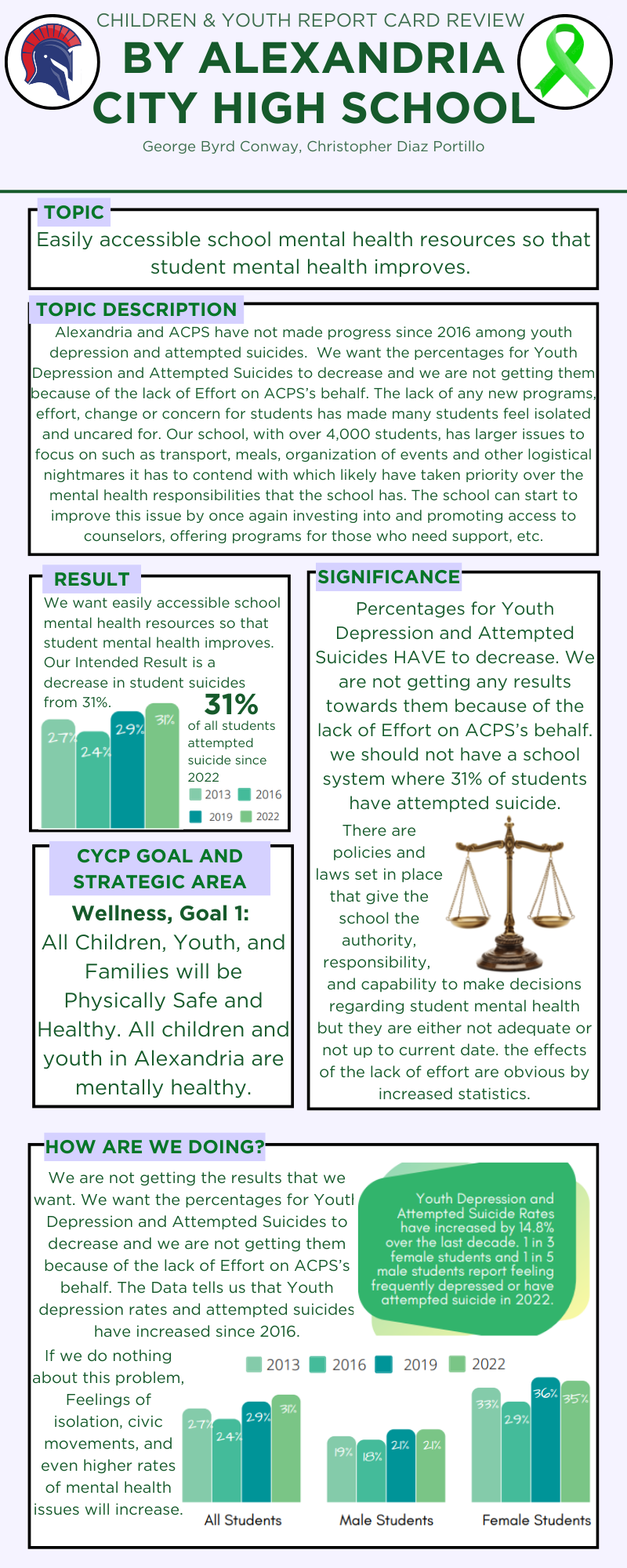
- Increase access to qualified mental-health professionals at school. Students asked ACPS to hire more counselors, licensed therapists, psychologists, and psychiatrists so young people can receive timely, professional support during the school day. They recommended faster and easier ways to schedule appointments or seek help, enough staff to respond when students are struggling, and support that does not rely primarily on school counselors to meet every mental-health need. One student specifically recommended hiring more female psychologists and creating an environment where teens feel safe opening up (Sources: Mental Health & Access to Counselors by Gennessis Villegas-Osorio (2026); Mental Health & Student Stress by Dagmawit Goshu (2026); More Mental Health Resources by Mayelin Lopez (2026); Students Struggling with Mental Health & Depression by Yasin Bhuiyan (2026); Teen Mental Health by Narelie Jasmin Navarro Yanez (2026); Easily Accessible School Mental Health Resources by George Byrd Conway and Christopher Diaz Portillo (2025); Youth Mental Health by Andres Quiro Gasantillan (2025); Youth Mental Health by Flores Garcia (2025); Youth Mental Health by Mateo Sherly (2025); and Improving Youth Mental Health by Raza (2026)).
- Make existing mental-health resources easier to find, understand, and use. Students recommended ongoing outreach through posters, announcements, classroom or advisory presentations, social media campaigns, and student-led awareness efforts. One student proposed a required Mental Health Awareness Week during Titan Advisory, with hands-on tutorials showing students exactly how to access Hazel Health and the Teen Wellness Center. Students also wanted clearer communication about counseling, support groups, online services, and other available help so they know where to go and how to get started (Sources: Student Mental Health & Wellness by Fatima Wonneh (2026); Mental Health Awareness by Katerin Lopez (2026); Mental Health Civic Action Project by Clifford Wobil (2026); Hispanic Youth Mental Health by Osorto and Martinez (2025); Lack of Student Motivation in School by Angie Alvarado (2026); Mental Health & Access to Counselors by Gennessis Villegas-Osorio (2026); Mental Health by Alexander Carreto (2026); More Mental Health Resources by Mayelin Lopez (2026); Students Struggling with Mental Health & Depression by Yasin Bhuiyan (2026); Easily Accessible School Mental Health Resources by George Byrd Conway and Christopher Diaz Portillo (2025); Youth Mental Health by Andres Quiro Gasantillan (2025); and Improving Youth Mental Health by Raza (2026)).
- Protect students’ privacy and make mental-health support feel safer and easier to approach. Students recommended more private counseling options, easier drop-in access without complicated appointments, stronger relationships with counselors, and anonymous ways to request help. They also proposed welcoming spaces that feel less formal or clinical than a traditional counseling office. One student specifically noted concerns about the privacy policies of an existing wellness center. Students emphasized that privacy, trust, and comfort can affect whether young people feel safe asking for help (Sources: Improving Student Access to School Counselors at ACHS by Sara Al Bahlani (2026); Mental Health & Emotional Wellness by Maryamawit.A (2026); Mental & Behavioral Health by Lopez (2026); and Mental Health Civic Action Project by Clifford Wobil (2026); Access to Mental Health Care by Anthony Galo & Gabriel Lopez-Alberto (2025); Mental Health by Carreto (2026); Mental Health by Jakharri Roger (2026); Students Struggling with Mental Health & Depression by Yasin Bhuiyan (2026); Youth Mental Health by Sherly (2025); and Improving Youth Mental Health by Raza (2026)).
Equitable, Coordinated & Youth-Informed Support
- Provide mental-health support that reflects young people’s cultures, languages, identities, and experiences. Students recommended bilingual and culturally grounded services for Hispanic and immigrant youth, LGBTQ+-affirming education and support, and trusted community-based care for immigrant families experiencing fear, trauma, or family separation related to immigration enforcement. They also called for safe community spaces, culturally responsive clinicians, accessible outreach, and partnerships with organizations trusted by the communities being served (Sources: Mental Health by Cultures by Valeria Galeano Del Cid (2026); LGBTQ+ Education, Kam (2026); Physical, Mental, & Behavioral Health, Phoebe Booker (2026); and Hispanic Youth Mental Health by Osorto and Martinez (2025)).
- Work with school, health, and community partners so students have more ways to get help. Students identified ACPS counselors and Student Support Teams, the School Board, the Teen Wellness Center, Hazel Health, the Alexandria Community Services Board, the Alexandria Health Department, Neighborhood Health, the ACPS FACE Center, RAISE, the Campagna Center, Mental Health America, recreation centers, and other community organizations as possible partners or resources. They described roles including school-based and virtual counseling, mental-health screenings, bilingual and culturally responsive support, family outreach, community programs, peer-mediator training, and connecting students with additional help. Students also identified NAMI and the 988 Suicide & Crisis Lifeline as sources of mental-health information and crisis support (Sources:Student Mental Health & Wellness by Wonneh (2026); Mental Health Support for Students at ACHS by Nazar (2026); Mental Health by Cultures by Del Cid (2026); Mental Health & How it Affects Students by Christian Ramirez (2026); Mental Health & Emotional Wellness by Maryamawit.A (2026); Physical, Mental, & Behavioral Health by Elvir (2026); Mental Health Awareness by Eliud Monge-Paz (2026); and Hispanic Youth Mental Health by Osorto and Martinez (2025); Access to Mental Health Care by Galo & Lopez-Alberto (2025); Mental Health by Roger (2026); Youth Mental Health by Quiro Gasantillan (2025); Youth Mental Health by Flores Garcia (2025); Youth Mental Health by Sherly (2025); and Improving Youth Mental Health by Raza (2026)).
- Use youth and family feedback to evaluate and improve mental-health programs. Students proposed using pre- and post-session surveys, tracking how many sessions are held, how many young people attend and return, and how many people are reached through outreach. They also recommended asking students and families how participants are feeling, what they liked, and what should be improved and using that feedback to make the program better (Sources: Hispanic Youth Mental Health by Osorto and Martinez (2025)).
Prevention, Coping & a Healthier School Experience
- Train teachers and school staff to recognize when students are struggling and respond supportively. Students recommended preparing educators to recognize early warning signs, respond without judgment, connect students with appropriate help, use trauma-informed practices, and understand how academic demands and major transitions can affect mental health. They also recommended training staff to facilitate respectful, LGBTQ+-affirming conversations about sexual orientation, gender identity, and mental well-being (Sources: Mental Health by Hannah Meehan, Olivia Powers, Shira Gordon, and Juliet Houck (2025); Student Mental Health, Urbina and Stehanie Garcia (2026); LGBTQ+ Education, Kam (2026); Mental Health In Alexandria's Youth by Joneisha Robinson (2026); and Student Mental Health in School by Estefany Ordonez (2026)).
- Provide ongoing mental-health education and normalize asking for help. Students recommended age-appropriate mental-health education beginning in middle school and continuing through high school, including regular classroom discussions, seminars, advisory lessons, and awareness campaigns. They wanted students to learn how to recognize when they or a peer may need help, talk openly about mental health, and connect with available support without shame or stigma (Sources: Mental Health Education & Awareness, John Bowden & Robert Carothers-Ruiz (2026); Mental Health In Alexandria's Youth by Robinson (2026); and Student Mental Health, Stephany Urbina and Stephanie Garcia (2026)).
- Reduce school-related stress and create a healthier balance between academic expectations and student well-being. Students recommended reducing homework and academic pressure, offering more tutoring and one-on-one help, and giving students time during the school day to complete assignments or relax. They also proposed wellness activities, mental-health days, and a free period to help students manage stress and avoid feeling overwhelmed or burned out (Sources: School Related Stress Among Students by Rosselyn Gonzalez (2026); Student Mental Health in School Ordonez (2026); Increasing One-on-One Support by Melvin Argueta (2026); Lack of Student Motivation in School by Alvarado (2026); Student Mental Health, Urbina and Garcia (2026)and More Mental Health Resources by Lopez (2026)).
- Teach social-emotional skills and practical coping strategies. Students recommended structured opportunities during classes, advisory, and out-of-school-time programs to build self-awareness, emotional regulation, relationship skills, decision-making, mindfulness, movement, and healthy ways of managing stress. Some proposed a dedicated freshman SEL course or therapist-designed advisory lessons, along with support for seniors managing the transition from high school to college or adulthood (Sources: Youth Behavioral Health by Angelly and Madison (2025); Mental Health Awareness by Eliud Monge-Paz (2026); Mental Health by Sajjad (2026); Physical, Mental, & Behavioral Health by Elvir (2026); Mental Health in NovA, Brenda Anderson & Lily Clance (2026); Socio-Emotional Health for 9th Graders, Aidan Muldoon (2026); and Youth Mental Health by Bahara Kabiri and Camila Chavez (2025); and Youth Mental Health by Escobar Mateo Sherly (2025)).
Student report cards informing these recommendations:
- Easily Accessible School Mental Health Resources by George Byrd Conway and Christopher Diaz Portillo (2025)
- Hispanic Youth Mental Health by Jason Osorto & Anthony Martinez (2025)
- Improving Youth Mental Health by Khola Raza (2026)
- Improving Student Access to School Counselors at ACHS by Sara Al Bahlani (2026)
- Increasing One-on-One Support by Melvin Argueta (2026)
- LGBTQ+ Education, Kam (2026)
- Mental & Behavioral Health by Jimmy Lopez (2026)
- Mental Health by Hannah Meeha, Olivia Powers, Shira Gordon, & Juliet Houck (2025)
- Mental Health by Dua Sajjad (2026)
- Mental Health & Access to Counselors by Gennessis Villegas-Osorio (2026)
- Mental Health & Emotional Wellness by Maryamawit.A (2026)
- Mental Health & How it Affects Students by Christian Ramirez (2026)
- Mental Health & Student Stress by Dagmawit Goshu (2026)
- Mental Health Awareness by Eliud Monge-Paz (2026)
- Mental Health Awareness by Katerin Lopez (2026)
- Mental Health by Cultures by Valeria Galeano Del Cid (2026)
- Mental Health Civic Action Project by Clifford Wobil (2026)
- Mental Health Education & Awareness, John Bowden & Robert Carothers-Ruiz (2026)
- Mental Health In Alexandria's Youth by Joneisha Robinson (2026)
- Mental Health in NovA, Brenda Anderson & Lily Clance (2026)
- Mental Health Support for Students at ACHS by Ahmad Ehsan Nazar (2026)
- More Mental Health Resources by Mayelin Lopez (2026)
- Physical, Mental, & Behavioral Health by Alyson Elvir (2026)
- Physical, Mental, & Behavioral Health by Phoebe Booker (2026)
- School Related Stress Among Students by Rosselyn Gonzalez (2026)
- Socio-Emotional Health for 9th Graders, Aidan Muldoon (2026)
- Student Mental Health, Stephany Urbina and Stephanie Garcia (2026)
- Student Mental Health & Wellness by Fatima Wonneh (2026)
- Student Mental Health in School by Estefany Ordonez (2026)
- Students' Mental Wellness & Academic Balance by Reina Pineda Flores (2026)
- Students Struggling with Mental Health & Depression by Yasin Bhuiyan (2026)
- Teen Mental Health by Narelie Jasmin Navarro Yanez (2026)
- Youth Behavioral Health by Angelly and Madison (2025)
- Youth Mental Health by Andres Quiro Gasantillan (2025)
- Youth Mental Health by Axel Flores Garcia (2025)
- Youth Mental Health by Escobar Mateo Sherly (2025)
Youth Recommendations for Preventing and Responding to Youth Substance Use
Prevention, Education & Healthy Alternatives
- Provide honest, ongoing education about substance use and its risks. Students recommended continuing to educate young people about vaping and other drugs, creating clubs, sharing information online, and encouraging students to speak with their peers. They also pointed to videos created by Alexandria students as a useful way to share credible reasons not to vape. Education should clearly explain how substance use can harm physical and mental health, interfere with attendance and learning, affect young people’s future goals, and lead to lasting addiction (Sources: Youth Substance Use by Jasmin and Vanessa (2025); Substance Use by Omar and Emerson (2025); and Drug-Free Schools by Alazar Aweke (2025)).
- Strengthen vaping prevention and respond consistently when vape detectors are activated. One student recommended communicating more clearly about the consequences of vaping during school and giving security staff clear responsibility to respond when bathroom vape detectors go off. The report emphasized that schools must take the lead in preventing vaping during the school day, while parents and community partners can reinforce prevention outside school. The report identified the Substance Abuse Prevention Coalition of Alexandria and the Virginia Cannabis Control Authority as organizations that could support education, policy, and community prevention efforts (Sources: What Will It Take to Help Students Prosper by Preventing Students from Using Vapes or Carts During School? by Christian Orrell (2025)).
- Offer positive alternatives to substance use through sports, recreation, clubs, mentoring, and peer support. Students recommended structured after-school programs that give young people something positive to do, teach life skills and healthier ways to cope, and connect them with peers and role models. They emphasized helping struggling students put their energy into school and activities that support their success, make it across the graduation stage, and create a better life for themselves (Sources: Youth Drug & Substance Abuse (2026); Drug Addiction and Gang Affiliation by Arielle Chavarry-Santana (2026); Youth Substance Use (2025); and Youth Substance Use (2025)).
- Address the pressures and challenges that can lead young people to use substances. One student report identified peer pressure, school stress, mental-health challenges, home environments, easy access to drugs, and boredom as major contributing factors. Students recommended responding with counseling, empathy, positive role models, peer support, life skills, and healthier ways to cope. One student also cautioned that strict rules and consequences alone may push substance use outside school rather than help students stop (Sources: Youth Drug & Substance Abuse (2026); Youth Substance Use (2025); and Drug Addiction and Gang Affiliation by Chavarry-Santana (2026)).
Early Intervention, Treatment & Supportive Relationships
- Make trained substance-use counselors consistently available at every ACHS campus. One student recommended guaranteed referral pathways to DCHS for minors who need additional help. The report card emphasized that access to DCHS rehabilitation for minors can be inconsistent and that too few students currently have access to on-site substance-use counseling (Sources: Youth Drug & Substance Abuse (2026)).
- Create after-school counseling and rehabilitation programs in partnership with ACPS and DCHS. Students recommended school-based and after-school programs that allow young people to receive help while continuing their education. One student proposed structured programs providing counseling, mentoring, and life-skills support for students at risk of substance use, funded and operated through a partnership between ACPS and DCHS (Sources: Youth Drug & Substance Abuse (2026); and Youth Substance Use (2025)).
- Create supportive spaces where students can talk honestly about substance use and ask for help. Students recommended an environment where young people can speak about drug-related problems, receive honest information with empathy, see positive role models, and learn healthier coping mechanisms and lifestyle choices. They also suggested connecting struggling students with peers who have experienced similar challenges (Sources: Youth Substance Use (2025); and Drug Addiction and Gang Affiliation by Arielle Chavarry-Santana (2026)).
- Strengthen peer and intergenerational mentoring for students affected by substance use or gang involvement. One student recommended improving an existing ACHS youth program and involving seniors in advising and encouraging younger students. Students also proposed mentorship within structured after-school programs, clubs, and opportunities to talk with peers who have faced similar challenges (Sources: Drug Addiction and Gang Affiliation by Chavarry-Santana (2026); Youth Drug and Substance Abuse (2026); and Substance Use by Omar and Emerson (2025)).
Safety, Accountability & Shared Responsibility
- Train all ACHS staff to administer Narcan. Students recommended changing Narcan training from voluntary to mandatory for all staff so both campuses are fully prepared to respond to an overdose. They proposed incorporating the approximately 30-minute course into existing professional-development sessions and ensuring staff know how to access and confidently administer the Narcan already available at ACHS (Sources: Teacher Narcan Training & Accessibility by Wesley O’Connell, Millie Barrientos, and Randy Alverz (2025)).
- Apply drug and vaping rules consistently, while also helping students change their behavior. Students supported clear school policies and consequences, and one report card specifically noted that the existing code of conduct was not being enforced consistently. At the same time, students cautioned that punishment alone may push substance use outside school without helping young people stop. They recommended pairing clear expectations with counseling, early intervention, youth programs, positive role models, and opportunities that help students cope differently, remain focused on school, and reach graduation (Sources:Youth Drug and Substance Abuse, student author not listed (2026); Drug Addiction and Gang Affiliation by Chavarry-Santana (2026); Drug-Free Schools by Aweke (2025); and Substance Use by Omar and Emerson (2025)).
- Work together across schools, families, health services, and the community. Students identified ACPS administrators and the School Board, DCHS, parents, educators, health professionals, law enforcement, community organizations, and youth-program staff as people who could help prevent substance use and connect students with support. They also named the Teen Wellness Center, Neighborhood Health, the Alexandria Health Department, the Substance Abuse Prevention Coalition of Alexandria, and the Virginia Cannabis Control Authority as useful partners or resources for education, screening, counseling, referrals, community outreach, and Narcan access or training (Sources: Youth Drug and Substance Abuse (2026); Teacher Narcan Training & Accessibility by O’Connell, Barrientos, and Alverz (2025); What Will It Take to Help Students Prosper by Preventing Students from Using Vapes or Carts During School? by Orrell (2025); Youth Substance Use (2025); Drug-Free Schools by Aweke (2025); and Drug Addiction and Gang Affiliation by Chavarry-Santana (2026)).
Student report cards informing these recommendations:
- Student report cards informing these recommendations:
- Drug Addiction and Gang Affiliation by Arielle Chavarry-Santana (2026)
- Drug-Free Schools by Alazar Aweke (2025)
- Substance Use by Omar and Emerson (2025)
- Teacher Narcan Training & Accessibility by Wesley O’Connell, Millie Barrientos, and Randy Alverz (2025)
- What Will It Take to Help Students Prosper by Preventing Students from Using Vapes or Carts During School? by Christian Orrell (2025)
- Youth Drug & Substance Abuse (2026)
- Youth Substance Use by Jasmin and Vanessa (2025)
Youth Recommendations for Environmental Protection & Healthy Natural Spaces
Keeping Parks & Waterways Clean
- Organize more cleanups at Four Mile Run. One student recommended creating a group dedicated to cleaning Four Mile Run and continuing to monitor its condition. They emphasized that existing cleanup and restoration efforts are helping somewhat but are not yet enough to address the amount of litter residents see (Source: Four Mile Run Pollution Control by Jeremy Sosa Alvarenga (2026)).
- Add more trash cans and signs at Cameron Run Park. One student recommended making trash cans more available and adding signs reminding visitors to clean up after themselves and properly dispose of their waste. They emphasized that reducing litter would prevent pollution and protect wildlife and their habitats (Source: Pollution in Cameron Run Park by Tanya Ventura Flores (2026)).
- Use stricter rules and stronger consequences for littering at Four Mile Run and Cameron Run Park. Both students believed that people visiting these areas were a major source of litter and pollution. They recommended stronger littering rules and consequences, and one student specifically proposed increasing fines to discourage visitors from leaving trash behind (Source: Four Mile Run Pollution Control by Sosa Alvarenga (2026); and Pollution in Cameron Run Park by Tanya Ventura Flores (2026)).
- Add more trash cans, signs, and public reminders at Four Mile Run and Cameron Run Park. Students recommended making it easier for visitors to dispose of trash and reminding people to clean up after themselves, protect wildlife, and treat parks and streams with care (Source: Four Mile Run Pollution Control by Sosa Alvarenga (2026); and Pollution in Cameron Run Park by Ventura Flores (2026)).
- Reduce pollution runoff and improve water quality at Cameron Run Park. One student called for limiting the pollution entering the park’s water system and reducing litter so fewer water samples contain unsafe levels of bacteria (Source: Pollution in Cameron Run Park by Ventura Flores (2026)).
Protecting the Environment Together
- Protect wildlife and keep parks and waterways safe for recreation. Students emphasized that reducing litter and water pollution would prevent animals from eating harmful trash, protect wildlife habitats, and reduce hazards such as glass and other sharp objects along paths and in public spaces (Source: Four Mile Run Pollution Control by Sosa Alvarenga (2026); and Pollution in Cameron Run Park by Ventura Flores (2026)).
- Work with City and community partners to protect Four Mile Run and Cameron Run Park. Students identified the City of Alexandria, Recreation, Parks and Cultural Activities, and Four Mile Run Conservancy as groups that could support cleaner, safer parks and waterways. They described possible roles including organizing cleanups, observing and sharing information about environmental conditions, restoring habitat, managing stormwater, and supporting safe recreation (Source: Four Mile Run Pollution Control by Sosa Alvarenga (2026); and Pollution in Cameron Run Park by Ventura Flores (2026)).
- Share updates about cleanup progress and the condition of Four Mile Run. One student identified the City of Alexandria and Four Mile Run Conservancy as groups that could report how much pollution has been removed and provide information about the stream’s condition (Source: Four Mile Run Pollution Control by Sosa Alvarenga (2026)).
Student report cards informing these recommendations:
- Four Mile Run Pollution Control by Jeremy Sosa Alvarenga (2026)
- Pollution in Cameron Run Park by Tanya Ventura-Flores (2026)
Youth Recommendations for Improving Transportation & Mobility
- Use data and traffic-management tools to reduce congestion and cut-through traffic. One student recommended adaptive traffic signals that respond to changing traffic demand, targeted rush-hour parking restrictions where additional travel lanes are needed, and strategies that reduce the number of vehicles on the road during peak periods. The student emphasized keeping commuter traffic on appropriate routes rather than pushing it onto residential streets where children, pedestrians, and cyclists may be at greater risk (Source: Traffic Congestion, Josette Fogden-Hernandez (2026)).
- Make congested streets and intersections safer for pedestrians and cyclists. Students recommended raised crosswalks, curb extensions, safer separation between vehicles and pedestrians, greater use of public transportation, and continued collection of crash and near-miss data to identify dangerous locations and determine whether safety improvements are working (Source: Traffic Congestion, Fogden-Hernandez (2026)).
- Inspect roads every month so potholes can be found and repaired sooner. One student recommended replacing seasonal checks with monthly inspections because students reported encountering potholes frequently and believed earlier detection would reduce roadway hazards (Source: Potholes by Raymundo Lorenzana (2026)).
- Keep Alex311 available as an easy way for residents to report potholes. One student valued being able to submit a report and photograph and receive an estimated repair timeline. The report emphasized that resident reports help alert the City to hazards that might otherwise remain unnoticed (Source: Potholes by Lorenzana (2026)).
- Repair potholes as quickly as possible and keep roads maintained throughout the year. One student emphasized that potholes should not remain on roads for long because they can damage vehicles and create safety hazards, especially when they are difficult to see at night (Source: Potholes by Lorenzana (2026)).
Student report card informing these recommendations:
- Potholes by Raymundo Lorenzana (2026)
- Traffic Congestion, Josette Fogden-Hernandez (2026)